external image

Help for those learning English et al.

Joined
Jun 20, 2001
Location
Turn right, then right. then right again
Hi gang

I've had a few members ask me about the correct use of certain words in the English language that sound the same but are spelt differently.

I'll provide a few examples and add more when I think.of them.

THERE - Where something is e.g. I put the newspaper over THERE

THEIR - Belonging to them e.g. I just saw THEIR awesome screenshot

THEY'RE. - Abbreviation for THEY ARE e.g. These spiders are awful......THEY'RE everywhere"

TOO - As well as/In addition e.g. I've hit five aces TOO! / I'm just TOO excited

TO - In a direction toward etc e.g. I'm going TO deposit at 32Red.

YOUR - Belonging to you e.g. YOUR car is super fast

YOU'RE - Abbreviation of "YOU ARE"e.g Just let me know when YOU'RE going to the market


More to follow. Feel free to ask about words you're unsure about. :)
 
Ha! Nifty, when I read the thread title I thought you were garnering help for the fairer sex ie les.....

Oh, maybe it was a French word.

Mostly these problems stem from the verbal usage. In my early schooldays my English classmates scored low grades in English as though they could speak the language well they were poor in grammar and spelling. The ascendancy of ICQ has also aggravated the problem but as its so common now a reversal of this is unlikely.
 
lesrning english? :p

Here's one:

Then:
Pertaining to time - that was then, this is now.
In addition to - it's $19.99, then with tax it's $49.
Afterward - I deposited $100 and lost, then deposited another $100 and lost.

Than:
Used for comparing things - ie:
Nifty is smarter than the average bear.
It's better to be a winner than a loser.
 
lesrning english? :p

Here's one:

Then:
Pertaining to time - that was then, this is now.
In addition to - it's $19.99, then with tax it's $49.
Afterward - I deposited $100 and lost, then deposited another $100 and lost.

Than:
Used for comparing things - ie:
Nifty is smarter than the average bear.
It's better to be a winner than a loser.

If we continue with this Max will move this thread to the Attic. You ok with this Nifty?

Nifty is definitely smarter than the average bear but I usually ask ladies to bare with me and not bear.

With most of us we are likely to be a winner then a loser as our 'beginners luck' wears out
 
My favorite english rule is the I before E except after C rule.

I like it because there are actually more words that it doesn't apply to than there are words that it does.

It should be I before E except most of the time. But I guess that's a little vague.
 
here= something in immediate vicinity
hear= what you use your ears for

week= 7 days make a ....
weak= No food for a week, makes you weak

sea= smaller than an ocean but larger than a lake
see= I hear that this sea here that I can see will take a weak man a week to cross

Beatle= Thinks 8 days make a week
beetle= a German car

balls= what guys have
bawls= what guys do when kicked in the balls

hair= what old men don't have
hare= what Elmer Fudd never gets

ahhh...got to get to bed. here's more ... fare/fair, tear/tare, whole/hole
 
Pretty usefull i assume Nifty:)
One question pops up, was this a joke or is my english up for a repolishing:

Hi gang

I've had a few members ask me about the correct use of certain words in the English language that sound the same but are spelt differently.

isn't spelt some type of grain, and spelled the correct word?

:P
 
Lol@title

Stupid smartphone!!

Well I just hope it helps someone....then it's worth it.

Its important as it makes reading and comprehension easier. I know some posters might be having difficulties with the language but surely they should shore up their efforts and use the correct words as far as possible before posting. Forum etiquette you know and not just confined to CM.
 
isn't spelt some type of grain ....

Nope. Both are correct :)

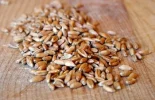
Which isn't to say that spelt is not a type of grain, which it is. In fact I'll be having some spelt flakes in my porridge this morning.

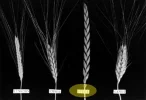
Spelt (Triticum spelta) is a hexaploid species of wheat. Spelt was an important staple in parts of Europe from the Bronze Age to medieval times; it now survives as a relict crop in Central Europe and northern Spain and has found a new market as a health food. [
You do not have permission to view link Log in or register now.
]

grains_including_spelt_-_marked.webp 2008_04_25-Spelt2.webp

FWIW the Wikipedia entry is a bit off. Spelt is very closely related to farro and that is quite popular in Central and Northern Italy and has been for a long time. Apparently it was the grain of choice for the Roman legions. Today they make everything from bread to hearty soups to desserts out of the stuff. Time doesn't seem to have diminished it's significance in Italian cuisine in the slightest. And for good reason, it is very tasty stuff!

Which brings me back to the topic at hand, sort of:
desert - a place with little or no rain, usually covered in heaps of sand.
dessert - a tasty course to follow one's meal, especially good if it somehow involves chocolate. ;)

[/mother-of-all-derails]
 
Last edited:
Great thread:thumbsup:
There is not many post I make that I'm satisfied with, and sometimes not knowing the right words for what I wants to say prevents me from write a post at all.
Sad as what I'm saying should be the most important thing, but I know my own reaction when people can't spell in Swedish so I'm doing my best here.:)
 
Apart from the blatant embarrassment of being taught correct English by Aussie`s, Eastern/Western/Northern and Southern Europeans, Americans + Asian dudes, we Brits are by far the worse culprits and need Fred`s like this (see what I did thar?).

There is one word that surpasses many others in the multi meaning stakes and that word is set/sett (without Googling I think it has around 30+ different meanings).

There is one word in the English dictionary that has the same letter twice in three consecutive places ie:- AARRTT, what is that word (no cheating).

Whenever I see a thread like this I cannot help but cast my mind back to my schoolboy days (thank God I didn`t go to one of those schools where the term `Head boy` was nothing more than a command :eek:), and, apart from those fond memories of being with Sarah Jones behind the bike shed (damn that girl was hot and intelligent, she could speak seven different languages fluently, and couldn`t say `No`in any of them), oops drifted there, anyway`s back to topic - Proverbs, remember those?, intended to broaden one`s horizons whilst on the very long road of bettering one`s grasp and understanding of the complex English language, but, at the same time, dripping, nay oozing, with hypocrisy, a few examples.......

1). The pen is mightier than the sword.

1b). Actions speak louder than words.

2). To many cooks, spoil the broth.

2b). Many hands, make light work.

3). The early bird, catches the worm.

3b). The second mouse, gets the cheese.

Just a few examples, there are many more.

Anyway`s great thread Nifty.
 
Than:
Used for comparing things - ie:
Nifty is smarter than the average bear.
It's better to be a winner than a loser.
That reminded me of one of the most common wrong words used by non-English natives...

Loose = Floppy, not tight, a slot paying out well!
Lose = Unable to find something you previously had possession of, not winning.

The word I always seem to have trouble with myself is "because" - nearly every time I write it I put "becuase" - thank god for spell-check! :p

KK
 
That reminded me of one of the most common wrong words used by non-English natives...

Loose = Floppy, not tight, a slot paying out well!
Lose = Unable to find something you previously had possession of, not winning.KK

Lol, thats a very fitting one forum wise..
One "o" can make such an impact on how your deposit experience unfolds:)
Reminds me of that other recent thread i think where nifty and myself came to the SLOT, LOST, and LOTS anagram..... are we finally discovering deeper, cabbalistic thruths of the gambling universe? :lolup:
 
Than:
Used for comparing things - ie:
Nifty is smarter than the average bear.
It's better to be a winner than a loser.

Here's a little one that's naturally come up in the thread:

EG: Means 'for example', such as in the quote above. Eg: Here is an example of what we're talking about - there could be multiple options. Use it in place of 'for example'

IE: Means 'that is'. IE: It is used to further define what you're talking about - the statement is factual and multiple forms cannot be simultaneously correct.

Some examples -

Bob likes to pet small furry animals. Eg: Puppies (you could could also use kittens, hamsters etc...)

Bob often mixed up the latin phrases 'exempli gratia' and 'id est'. Ie: He used IE in the place of EG, and visa versa.

:p
 
Great thread:thumbsup:
There is not many post I make that I'm satisfied with, and sometimes not knowing the right words for what I wants to say prevents me from write a post at all.
Sad as what I'm saying should be the most important thing, but I know my own reaction when people can't spell in Swedish so I'm doing my best here.:)

Even if you're not sure if you're typing the words correctly, you should always feel free to post. I've been chatting globally for probably 20 years and I can fully understand that not everyone is fluent in english. Keep in mind that there are many people who speak nothing but english and still make pretty simple mistakes.

If you mix a few words up, nobody is going to penalize you for it.
 
Even if you're not sure if you're typing the words correctly, you should always feel free to post. I've been chatting globally for probably 20 years and I can fully understand that not everyone is fluent in english. Keep in mind that there are many people who speak nothing but english and still make pretty simple mistakes.

If you mix a few words up, nobody is going to penalize you for it.

Thanks Skiny! I think my problem is that I'm penalizing myself more than I'm afraid of others doing it:rolleyes:
My mother is still correcting me if I dare to use words that's not grammaticly correct:o

What Baldidiot tried to explain about the difference between EG and IG I didn't get at all.
If someone can be so kind to....:D ...in easy English:o
 
What Baldidiot tried to explain about the difference between EG and IG I didn't get at all.
If someone can be so kind to....:D ...in easy English:o

Hmm, let me try again.

'EG' is latin for 'for example' - use it when you are providing examples of something
'IE' is latin for 'that is' or 'in other words' - use it when you are elaborating or defining something.

An easy way of figuring out which one should be used is to see which phrase would actually fit what you're saying. So to use another example:

"NetEnt have some great slots (for example Gonzo's Quest and Jack Hammer)" = "NetEnt have some great slots (eg: Gonzo's Quest and Jack Hammer)"
- here you are providing examples, but there are many possible options.

"I really should run to the store before my neighbour comes over for coffee or she'll have to drink it black (that is to say, I've run out of milk)" = "I really should run to the store before my neighbour comes over for coffee or she'll have to drink it black (ie: I've run out of milk)"
- here I am clarifying what I've already said with more information.

Does that make more sense?
 
Last edited:
Yes it did make a lot more sence.

I still think I have to ask my friend Emmeline to explain it a little more. I believe we only use EG = for example in Swedish so that's why I'm so unsure when I should use any of them.
 
Yes it did make a lot more sence.

I still think I have to ask my friend Emmeline to explain it a little more. I believe we only use EG = for example in Swedish so that's why I'm so unsure when I should use any of them.

In Hong Kong these are usually used in official correspondence but i.e. is used carefully and in small letters only so as not to confuse it with IE (Internet Explorer).
 
@Tirilej, I've never had difficulty reading your posts. Sometimes we are our own worst critics. Don't ever be afraid to post.

Itstheoneswhousetherunonsentences Or the ones who dont know how to use any type of puncuation or capitalization and who forget that paragraphs can be helpful or that there are such tools as spellcheck Or the ones who simply don't care at all. THEY LIKE TO CALL ATTENTION TO THEMSELVES AND CAN'T HELPTHEMSELVES SO THEY MUST SHOUT IT TO THE HEAVENS.

The ones who are sincere, imo, will never catch hell for posting (not everyone,even folks who have been reading and writing English all their life are literate in the language). And at times we tend to forget that English is a second or a third language for some. So, no apologies are needed...now GO POST!!!!;)


BTW, good thread Nifty :thumbsup:
 
@Tirilej, I've never had difficulty reading your posts. Sometimes we are our own worst critics. Don't ever be afraid to post.

Itstheoneswhousetherunonsentences Or the ones who dont know how to use any type of puncuation or capitalization and who forget that paragraphs can be helpful or that there are such tools as spellcheck Or the ones who simply don't care at all. THEY LIKE TO CALL ATTENTION TO THEMSELVES AND CAN'T HELPTHEMSELVES SO THEY MUST SHOUT IT TO THE HEAVENS.

The ones who are sincere, imo, will never catch hell for posting (not everyone,even folks who have been reading and writing English all their life are literate in the language). And at times we tend to forget that English is a second or a third language for some. So, no apologies are needed...now GO POST!!!!;)


BTW, good thread Nifty :thumbsup:

I have never found it difficult to understand Tirilej's posts either. Though it may be a second language for him, he seems to spend extra efforts to ensure we know what he means and that is already sufficient. There are just too many others who dont care. I recall there being posts with a single paragraph and no seperate sentences. They just lump together what they think without sparing a thought for the reader.
 
Last edited:
So true, just post, only the spammers, shills and idiots are dealt with, and sometimes some misunderstandings or heated discussions arise, but that mostly is not due to grammattical errors:)
I'm sure i make plenty errors myself, and never got assaulted:)
Btw Chu: i'm pretty sure Tirilej is a nice lady :D

Oops. I always mix them up. Sorry my fair damsel.
 
One that I've been called to task for is typing Rogue instead of Rouge (which isn't even English, but French) when I talked about belong to 32Red's Club Rogue.

Whose and who's - Whose is possessive "Whose coat is this?", while who's is a contraction for who is "Who's going to the party?"

Doesnt matter as I understand the English language stemmed from French. In English its blue but in French its bleu. Anyway, in some forums rogues are highlighted in red (rouge). Rogue players are also highlighted as such here.:D
 
while who's is a contraction for who is "Who's going to the party?"
The apostrophe must surely be one of the most confusing parts of the English language - even for us natives!
Do any other languages join two words together, leave out one or more letters and stick a ' in their place? :confused:
(Maybe in French?)

Also, the use of the ' with relation to plurals and possession is similarly confusing!
I won't try to explain - in case I get it wrong! :o

KK
 
The apostrophe must surely be one of the most confusing parts of the English language - even for us natives!
KK


Classic example is "Its" and "It's".

"It's" is short for "It is". What it is not is the possessive pronoun it is frequently confused with, e.g. "It's time for dinner".

"Its" is possessive, e.g. "The dog bit its tail".

Arrrrrrgh...:eek:
 
The apostrophe must surely be one of the most confusing parts of the English language ....

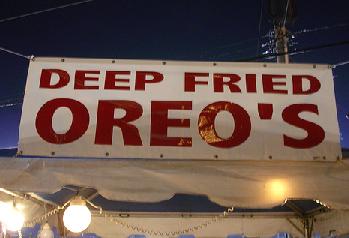
I've always liked the "Greengrocer's Apostrophe":
Apostrophes used in a non-standard manner to form noun plurals are known as greengrocers' apostrophes ... The term is believed to have been coined in the middle of the 20th century by a teacher of languages working in Liverpool, at a time when such mistakes were common in the handwritten signs and advertisements of greengrocers (e.g., Apple's 1/- a pound, Orange's 1/6d a pound). Some have argued that its use in mass communication by employees of well-known companies has led to the less literate assuming it to be correct and adopting the habit themselves. [
You do not have permission to view link Log in or register now.
]

Eg: ;)

DeepFriedOreos.JPG


What they are trying to say is that there is more than one deep fried oreo there, in other words the plural of "oreo", ie. "oreos". No apostrophe required.
 
Classic example is "Its" and "It's".

"It's" is short for "It is". What it is not is the possessive pronoun it is frequently confused with, e.g. "It's time for dinner".

"Its" is possessive, e.g. "The dog bit its tail".

Arrrrrrgh...:eek:

Good examples.

The confusing part is when you use "its" to proclaim possession you don't use the apostrophe -
"The car blew its tire."
But if you're talking about a specific person's possession you do need it -
"Jimmy's car blew a tire."

The only time the word it's has the apostrophe is when it is a contraction. The best way to be sure you're using it correctly is to not use the contraction and see if the sentence still makes sense.

With contraction: It's dinner time. (Correct.)
because....
Without: It is dinner time. (Makes sense.)

With contraction: The dog bit it's tail. (wrong)
because...
Without: The dog bit it is tail. (Makes no sense.)
 
.

What I find confusing is the who-whom thing.

Do not think I ever have used "whom", so it probably happens that I use "who" when I should have used "whom". Think I need to Google up some rules :D

Stupid "whom" :p
 
Nifty, ask and you shall receive...:D

I will spare someone's blushes, but this is from another thread...

This was being cause by a tech error. It was effecting all accounts.......

Affect (verb).....It was affecting all accounts.

Effect (noun)... The effect was that all accounts were affected by the tech error.

Effect (tr. verb)...... The changes to correct the tech error have now been effected across all accounts. In this example, effect as a verb means 'applied to'.

Affect/effect and loose/lose are the two mistakes that always send me screaming for my medication...:rolleyes:
 
Here's a little one that's naturally come up in the thread:

EG: Means 'for example', such as in the quote above. Eg: Here is an example of what we're talking about - there could be multiple options. Use it in place of 'for example'

IE: Means 'that is'. IE: It is used to further define what you're talking about - the statement is factual and multiple forms cannot be simultaneously correct.

Some examples -

Bob likes to pet small furry animals. Eg: Puppies (you could could also use kittens, hamsters etc...)

Bob often mixed up the latin phrases 'exempli gratia' and 'id est'. Ie: He used IE in the place of EG, and visa versa.

:p

lol, you're right! :o

Effect/Affect gets me too - also there's Assure/Ensure/Insure that people seem to mix up.

But one thing that really bugs me - you see this on ads and billboards and everywhere - if want to say "Save hundreds" they write "Save 100's" or thousands is 1000's.
 
Great thread, folks!!! I have always loved the English language and found it fun to use. Now math, on the other hand, is anathema to me. Who wants to start a thread on that? :p

Math aint so hard if it can relate to gambling. My Math teacher used to teach us on topics like probabilities by making reference to bets on horse-racing. Then my friend generated millions of paigow hands in order to gauge how best it would be set a hand. Possibly other than slots, you have to know a little bit of math to be able to understand any gambling activity and how to place bets on them.
 
What I find confusing is the who-whom thing.

You and about 99.5% of the rest of the English-speaking world. For me "whom" always sounded too old school to make it very useful. That said ...:
pronoun
1. the objective case of who: Whom did you call? Of whom are you speaking? With whom did you stay?
2. the dative case of who: You gave whom the book?

... Who is the appropriate form for the subject of a sentence or clause: Who are you? The voters who elected him have not been disappointed.
Whom is the objective form: Whom did you ask? To whom are we obliged for this assistance? This method of selecting the appropriate form is generally characteristic of formal writing ....(
You do not have permission to view link Log in or register now.
)

IMO almost all usage of "whom" in modern spoken English is by people trying to sound sophisticated or posh. They tend to use it incorrectly.
 
IMO almost all usage of "whom" in modern spoken English is by people trying to sound sophisticated or posh. They tend to use it incorrectly.
And to whom exactly would you be referring to there? :p

KK
 
Math is easy, you use it every day in everything you do, you just don't realize you are using it. I used to tutor young kids, I found it easier to try to find things they could relate to; i.e maybe a sport or a game. When shooting hoops, to setup to throw the ball the way they place their body they are creating an angle (not angel :D) with the basket. Or if they have so many chances at "killing" an opponent/s this is doing ratios. Or if you are reading a book, the book had 500 pages and you read 100 pages of the book you've read 1/5 of the book they are doing fractions and so on.

I tutored college students several semesters in trig and advanced trig using the same methods. It's just a matter of finding a method of breaking through to understanding. ;)

My sister-in-law is teaching English as a second language, she was a music teacher who retired and decided she didn't like being retired. She is now learning several new languages herself through this and is having a blast. She told me, "We take for granted how difficult this language really is, pronunciation, punctuation, spelling. English has got to be THE hardest language to overcome."
 
You and about 99.5% of the rest of the English-speaking world. For me "whom" always sounded too old school to make it very useful. That said ...:


IMO almost all usage of "whom" in modern spoken English is by people trying to sound sophisticated or posh. They tend to use it incorrectly.

Whenever a gal tells me she is going home to bed I always ask 'With whom?'.:D
 
Disclaimer: No, I haven't spent the last few days trying to think up more examples to demonstrate my wit and wisdom. :p Honestly! Even I am not that sad, though it's (:lolup:) a close run thing.

The Meister advises (verb) everyone to only play at accredited casinos. IMHO, that is the best piece of advice (noun) ever given.

In this case, it's all about the spelling.
 
Last edited:
Disclaimer: No, I haven't spent the last few days trying to think up more examples to demonstrate my wit and wisdom. :p Honestly! Even I am not that sad, though it's (:lolup:) a close run thing.

The Meister advises (verb) everyone to only play at accredited casinos. IMHO, that is the best piece of advice (noun) ever given.

In this case, it's all about the spelling.

You have wit and you are wise. No doubt about that:)
Thanks for the word wit. I have never heard it before, and that's something I might need a little bit more of:p

What I found hardest in english is the words that includes th. Thoughts, tough, through, though...
I always mix them up. Not to talk about spelling the word view. I still have to look it up each time:)
 
Something interesting on the subject of english...

The word "ye" isn't really used often except maybe in Ireland(?) and Newfoundland(?) - I'm not sure, I've never been to either place.
It's the plural of "you" and can still be heard in some songs such as "Oh come all ye faithful."
In the old days some English towns had a town crier yelling "Hear ye, hear ye" to attract everyone's attention before making an announcement.

Anyway, you also see this on some store fronts like this...

ye.webp

This was not actually intended to be read or pronounced as "ye" but is in fact pronounced "the." Apparently the reason for its use is in early English the "th" sound was written with a letter called a "thorn" which I have no key to display. Written it looked similar to a Y and early printers just used the Y because they didn't have anything else to represent it with. It would also end up looking like the word "Ye" on signs that used a hand written font.

Time passed and now we have modern English. People are still using that silly Y on signs trying to be fancy and probably have no idea it's really pronounced "the" anyway.
 

Users who are viewing this thread

Accredited Casinos

Read about our rating system and how it's done.
Back
Top