The investigation into the complaint raised here in regard to the Reel Deal game has started yielding results, and as promised before they will be disclosed in this thread.
.....
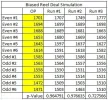
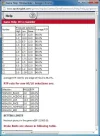
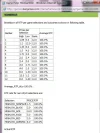
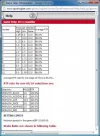
Analysis has revealed that Reel Deal was indeed returning at 96%, despite being advertised at 100%.
.....
It’s been suggested here that the parties involved have blocked Eliot’s investigation. This is simply not true. However, it is possible that some people contacted directly were away over the Holiday period or were not in a position to comment on confidential information to none permitted individuals.
I confess that I also am confused - a few database queries and you are yielding results. (Given that you have agreed to pay affected players, the results of these queries must have confirmed the previously, and extensively, reported results.)
These queries would take a few minutes to run, not 7 days, and could have been written/executed by anyone who understands how to calculate RTP. (Given that the RTP formula is (((A - B) / A) * 100), this should not have been a challenging resource to find.)
Assuming that some percentage of the game records for 2012 is contained in "archive databases", it might then take (at most) an hour or so (rather than a few minutes) to determine the full extent of losses, to generate the complete list of affected players, and to determine the amount that each of these players lost, for all of 2012. However, this is still pretty basic stuff - this is what Database Administrators are paid for.
So, I can certainly understand Eliot's frustration at essentially receiving no feedback from anyone, when the full extent of that feedback could have been, and quite possibly was, available within a day.
I can also understand Eliot's confusion concerning your statement:
Finsoft’s review revealed that this was the result of an administrative error on the game’s deployment to Betfred, where the wrong help file was attached to the game.
Given that this could be a documentation error (lower magnitude) or a game error (higher magnitude), you have stated:
1. This was a lower magnitude documentation error.
2. You had thus always intended to deploy a 96% RTP game, not a 100% RTP game?
Re:
... mistakes do happen ...
Aaron, I don't believe it would be possible to find someone who is more sympathetic to, or understanding of, that statement.

The remaining items brought up in this thread are still under investigation by our suppliers; they are:
1. The suggestion that the game in question’s RTP is adaptive
2. The suggestion that the game performs differently in fun and real modes
I'm proceeding under the very reasonable assumption that the answer to the first question would again involve simple queries that would take a few minutes to execute. Given that 7 days have passed, I'm therefore speculating that this answer is already available.
I'm proceeding under the assumption that the same game but with different RTPs (whether Play-for-Fun or Play-for-Real) is identified by source code version control. Therefore, a quick check on the server will determine which version of the file is deployed (file name, file version number, etc.). Again given that 7 days have passed, I'm therefore speculating that an answer here is also already available.
Aaron, you're right. I'm sticking my nose into something that may well be none of my damn business. However ...
... this affair has played right into the hands of the "tin foil hat brigade" who believe that ALL casino games offered online are "gaffed" to keep close to the intended RTP, rather than completely random.
... this affair and your response to it does have an impact on the entire industry.
Chris








 .
.






 I've a feeling this scandal wont be confined to merely the reeldeel game in question.