
Finsoft/Spielo G2 Games Issue

Status
Not open for further replies.
I personally have always regarded the GRA licensed casinos as the safest out there, due to the strict guidelines laid out by Gambling Commissioner in accordance with both EU and national law. Clinical overseeing and regulation of gambling operators in accordance with legislation and basic standards, verification via approved accounting / auditing and knowledge of the gambling industry, as an already established entity - and or vast experience gained from working for one with a proven track record - are the higher end necessities required to be granted a GRA license.

Knowing they require testing, auditing, approved testing regulations on relative software systems and RNG's, gambling aware / banking protocols, resolution of player disputes, gives you that inner feeling of security and trust, that was how I felt, until I looked a bit deeper after Nifty reliably informed me of thus........


Howeve, tests and audits of the following are not performed:- systems security, game evaluations, game payout calculations, live dealer systems, and segmented player funds.

Well and truly burst my bubble, akin to having a plumber come round to check your pipes, assuring you they're good to go, then hearing him mumble as he leaves - "I should have filled the system with water before I tested it tbh".
 
I couldn't agree more - this policy devalues the seal.


Not quite - any casino carrying a UKGC license would be required to ensure that any games they offered met the technical standards of the UKGC license. So while the software developer may not carry a license a UK licensed casino would be forced to do the testing themselves. So as long as your casino carries a UKGC license (i.e. is registered in the UK) all the games have to meet their standards. Good luck finding one of those.

As i stated in my reply to the UKGC, these software developers are essentially receiving the credibility that a UKGC seal brings - i'm sure many of the more experienced players here and elsewhere may question that credibility, but to the average punter it is real - while not actually having to meet any of the technical standards that the license entails.

In this case, the software developer held the UKGC license, and the casino held an offshore one. Of all the games it carried, it was one who's developer held a UKGC license that has proven to be gaffed. Further complications were then revealed. The game developed under a UKGC license was then passed to a third party not holding a UKGC license, who was the one that actually "gaffed" the game. It now appears that the UKGC license does not mean that the game is deployed as designed. Surely the UKGC license should at least stipulate that once developed, the game logic CANNOT be messed around with by a third party. We DO have this assurance with Microgaming, where players know that individual operators have no ability to tweak their versions of the game beyond the addition of their own branding, which is limited to the "eye candy" of the game, not it's underlying logic.

It seems any seal held by a game developer are pretty much worthless to the end user. It is the seals held by the operators that we should be looking at.

One question of course is whether this game even meets the GRA standards, or indeed the standards of any other regulator. If it does, we have a situation where games such as this have been OK for years, and we just haven't noticed until now.

If I wanted to play a cheating game I would nip down the pub (or the services), not log in to an online casino. At least I KNOW what I am playing at the pub, and thus know HOW to play it (or not play it on that visit).

This may also mean that some of the players who called out a cheating game couldn't get far because they couldn't present a solid enough case, not that the game they flagged up was fair.

I encountered a cheating casino Blackjack game early in my playing "career", and was trying to uncover the underlying pattern so that I could try to beat it as I would any UK cheating fruit machine. The casino in question suddenly closed down, but at least paid out player balances rather than doing a runner. Not long after, it's video poker game was exposed as a cheat, with a theoretical RTP way over 100% if it was honest, which it clearly wasn't.

Any game that "cheats" through weighting, dealing seconds, etc in order to stay within an overall RTP range, rather than being random, MUST be displayed as a slot like game, or something like a scratchcard. This would make it clear to players that they were playing a game where the odds CANNOT be calculated from the "virtual elements" being used.
 
In this case, the software developer held the UKGC license, and the casino held an offshore one. Of all the games it carried, it was one who's developer held a UKGC license that has proven to be gaffed. Further complications were then revealed. The game developed under a UKGC license was then passed to a third party not holding a UKGC license, who was the one that actually "gaffed" the game. It now appears that the UKGC license does not mean that the game is deployed as designed. Surely the UKGC license should at least stipulate that once developed, the game logic CANNOT be messed around with by a third party. We DO have this assurance with Microgaming, where players know that individual operators have no ability to tweak their versions of the game beyond the addition of their own branding, which is limited to the "eye candy" of the game, not it's underlying logic.

It really doesn't make any difference who developed the game and it should be noted that both Realistic and FinSoft UKGC licenses. Neither are required to meet the technical specifications of the license as they are not providing their products to front end operations licensed in the UK.

Personally i see the burocratic reason for the license - i.e. they've just blanket insisted that everyone have one - but this has had the opposite of the intended effect and made the seal essentially worthless when dealing with any online operation. They quoted a stat that 80% of all online gaming in the UK was done with brands licensed outside of the UK. Honestly i find that hard to believe. Maybe it's different in the Bingo/Sports/Poker markets but i couldn't give you the name of even one online casino licensed in the UK, so where is the 20% playing with UK licensed companies coming from?

One question of course is whether this game even meets the GRA standards, or indeed the standards of any other regulator. If it does, we have a situation where games such as this have been OK for years, and we just haven't noticed until now.

The GRA take no responsibility for testing the fairness of the games their licensees offer, however i've just had a look through the terms and conditions for receiving a license;

(5) A licence holder should not implement game designs or features that may reasonably be expected to mislead the customer about the likelihood of particular results occurring. This includes, but is not limited to the following:

(a) Where a game simulates a physical device the theoretical probabilities and visual representation of the device should correspond to the features and actions of the physical device (e.g. roulette wheel). “


and

7.2. ‘Play for Free’ Games
(1) Play for free games for no prize are not gambling but should accurately reflect any „real-money‟ version of the game, and should not be used to encourage those under 18 to use licensed gambling facilities.

(2) In particular, such games should not be designed to mislead the player about the chances for success by, for example, using mappings that produce different outcomes than the cash game. Licence holders should be able to demonstrate this equivalence to the Gambling Commissioner upon request


I've not written to the GRA requesting a formal response to this issue. I'll keep you posted when i hear something back. These games - both real and free play - are in clear breach of the GRA licensing terms.
 
I've just taken a quick look through other major regulators terms and conditions with regard to the technical standards of the games. For the LGA and IoM i could find no requirements on the standards for free play games or the electronic representation of real devices. It should also be stated that the documentation i looked through for these bodies appeared to be notably similar.

Alderney has the following;

If the licensee offers fun play opportunities to the public, describe the manner in which fun play is offered, and the controls in place to ensure customers for fun play are not able to engage in play for consideration (gambling) without full compliance with the regulatory controls identified in the Ordinance, Regulation, and the ICS. While the Commission does not intend to fully regulate fun play activity, it considers fun play to constitute marketing and advertising activity and it is therefore governed by the Regulations on advertising standards.(R4, R6, R9 and R60) For example, the Commission expects that fun play games will offer the fun player an identical theoretical percentage return to player and gaming experience as the licensee offers at the same moment to registered customers for gambling.

and

Games should not give the customer a false expectation of better odds by falsely representing any occurrence or event.

and

Where a game is represented or implied to be a simulation of a physical device, the behaviour of the simulation should be identical to the expected behaviour of the physical device.
a) The visual representation of the device should correspond to the features of the physical device.
b) The probability of any event occurring should be as for the actual physical device E.g. the probability of obtaining a “six” on a simulated dice throw should be 1/6.


I'm going to contact the IoM and LGA to see if i've missed something.
 
Interestingly the contact form on the LGA website seems to bounce back the emails as undeliverable....
 
Interestingly the contact form on the LGA website seems to bounce back the emails as undeliverable....

Typical LGA:rolleyes:

The LGA is for show, and to make money for Malta. It is NOT a serious avenue for player protection, nor dealing with complaints about their licensees. The LGA is like the Kahnawake was a few years ago. The Kahnawake made changes to make them seen a credible regulator and final arbiter of player complaints, whilst the LGA have sat back and done as little as they can, taking comfort from the fact that being automatically whitelisted by the UKGC because Malta is part of the EU lends them more credibilty for doing very little than non EU regulators can get by making sweeping improvements. LGA licensed casinos can advertise on UK TV, Kahnawake ones can't, no matter how robust the regulations there are compared to the LGA.
 
I think that I can contribute a little bit of data here.

Galewind Software Corp. is licensed as a Core Service Provider Associate by the AGCC. I view this as a "company and product" license. That is, we are certified to be a real company, with real offices, with real people who have a demonstrated ability in the knowledge of software, with confirmed tax returns, corporate records, etc. In addition, the "public interface" into our games meets an assortment of criteria, the "Administration System" for our casino accurately records game play results, etc.

Our RNG is certified by iTech Labs. This certification covers the "quality" of the RNG algorithm, the mechanism for seeding the RNG, the code for "scaling and mapping" the RNG output to game values or components (like playing cards and Keno balls), etc.

Our "RTPs" are certified by Certified Fair Gambling, who issues monthly reports that we then make available to the public. In addition, Certified Fair Gambling also performs statistical analysis of game play results. They do this every month. They also compile 6 months worth of records into one big file and run statistical analysis on this 6-month file. (They again do this for a 12-month analysis, 18-month, 24-month, etc. Somewhere within CM I published a link to the 24-month report from CFG.)

So, we are certified by 3 different companies, each one of those companies providing a different "service" to both Galewind Software, to the Casino(s) running our product, and to the Casino customers that are playing our games.

Chris
 
Hey Chris

I'd assume then that part of that licensing - with respect to the AGCC - requires that your games meet the technical standards listed above and if you were found to be running free games with inflated RTPs or card games where the probabilities did not match those of the real device you'd expect your license to be in jeopardy?
 
Hey Chris

I'd assume then that part of that licensing - with respect to the AGCC - requires that your games meet the technical standards listed above and if you were found to be running free games with inflated RTPs or card games where the probabilities did not match those of the real device you'd expect your license to be in jeopardy?

Let me put 2 things "up front":

1. The "legal world" can be a very complicated place. The "bureaucratic world" can be a very complicated place. If these two worlds were brought together with sufficient energy, the result may be the creation of a Black Hole from which nothing can escape.

2. I'm just a simple programmer.

OK, that said - I assume that what you have stated would be true. That is, if the Play-for-Free product != Play-for-Real product, then this would not be correct or acceptable to the AGCC.

I think that if one of our Play-for-Free games was reported to have a different RTP, or to demonstrate different game play in general, than its Play-for-Real cousin, then I would expect that we would be audited by the AGCC to verify that this was true, and if true that a "Corrective Action" would then be filed.

This corrective action may require that we remove from public use whichever version of the game is not in compliance with the published performance specifications. We would then need to correct this non-conforming game, submit it for verification to the AGCC, and only on their review and approval would we then be able to release it back into production.

Chris

[Edited to add: The AGCC's Full Tilt Poker mess is etched into the tablets of history.

However, I found the AGCC audit of Galewind Software to be comprehensive, aggressive, thorough and demanding. (I'm not sure which of those 4 words is redundant.) The assigned AGCC personnel took it seriously. (I'd like to think it goes without saying that Galewind took it seriously.)

This was no "bureaucratic bullshit" or "rubber stamping" - there was no under-the-table exchange of a stuffed envelope. (I reported on our AGCC audit experience somewhere within the vaults of Casinomeister's forum.) This was the "real deal".]
 
Last edited:
Hey Chris

I'd assume then that part of that licensing - with respect to the AGCC - requires that your games meet the technical standards listed above and if you were found to be running free games with inflated RTPs or card games where the probabilities did not match those of the real device you'd expect your license to be in jeopardy?

For all the claims about regulation it's impossible to stop inflated RTPs or rigged probabilities. These games are not being tested by the regulators, new games and paytables are pushed out without any kind of oversight.
 
For all the claims about regulation it's impossible to stop inflated RTPs or rigged probabilities. These games are not being tested by the regulators, new games and paytables are pushed out without any kind of oversight.

My point wasn't that regulators offer realistic protection - they don't - but i'd say it's fairly clear to everyone involved that there have been breaches to the license in this case and the regulator should be expected to be getting involved at this stage. Even if regulators can't provide the protection that casinos would have you believe, if they refuse to enforce the rules they lay out in their licenses they've shown their license to be absolutely worthless.
 
Can some one here please clarify the game content rules that have been broken by this game, aside that of the freeplay game was different to the real play and that the 100%RTP was a incorrect figure in the help section?

And please quote the relevent legislation that has been breached(giving a source).

Thanks
 
Can some one here please clarify the game content rules that have been broken by this game, aside that of the freeplay game was different to the real play and that the 100%RTP was a incorrect figure in the help section?

And please quote the relevent legislation that has been breached(giving a source).

Thanks

You do not have permission to view link Log in or register now.


"game information should include the following:
d) the number of decks or frequency of shuffles in a virtual card game;
h) Information about the likelihood of winning:
i) a description of the way the game works and the way in which winners are
determined and prizes allocated;
ii) For each game, information about the potential prizes and/or payouts
(including the means by which these are calculated) should be easily
available. This should include, where applicable:
(1) Pay tables, or the odds paid for particular outcomes.
"

7.1 Game fairness
(3) Games should be implemented and operate fairly and strictly in accordance with the
published rules and prevailing RTP where applicable.

(5) A licence holder should not implement game designs or features that may
reasonably be expected to mislead the customer about the likelihood of particular
results occurring. This includes, but is not limited to the following:
(a) Where a game simulates a physical device the theoretical probabilities and visual
representation of the device should correspond to the features and actions of the
physical device (e.g. roulette wheel).
(b) Where multiple physical devices are simulated the probabilities of each outcome
should be independent of the other simulated devices (e.g. dice games).
(c) Where the game simulates physical devices that have no memory of previous
events, the behaviour of the simulations should reflect the behaviour of the
physical devices (e.g. roulette wheel, cards, dice games).

7.2. ‘Play for Free’ Games
(1) Play for free games for no prize are not gambling but should accurately reflect any
„real-money‟ version of the game,

(2) In particular, such games should not be designed to mislead the player about the
chances for success by, for example, using mappings that produce different
outcomes than the cash game. Licence holders should be able to demonstrate this
equivalence to the Gambling Commissioner upon request.

7.3. Compensated or adaptive games
(1) Games should not be “adaptive” or “compensated”, that is, the probability
of any particular outcome occurring should be the same every time the game is
played, except as provided for in the (fair) rules of the game.
 
Just a quick question, i have dumped some amounts at this game on bet365 for some months ago also many of Realistic Games slots with really low RTP, IF the game was rigged at betfred could this also means it is rigged at bet365?
 
You do not have permission to view link Log in or register now.


"game information should include the following:
d) the number of decks or frequency of shuffles in a virtual card game;
There is no deck of cards, theres outcomes of 1-12, no 10s and thats just selection images
h) Information about the likelihood of winning:
They give the RTP % (ok so its incorrect)
i) a description of the way the game works and the way in which winners are
determined and prizes allocated;
ii) For each game, information about the potential prizes and/or payouts
(including the means by which these are calculated) should be easily
available. This should include, where applicable:
(1) Pay tables, or the odds paid for particular outcomes.
"

7.1 Game fairness
(3) Games should be implemented and operate fairly and strictly in accordance with the
published rules and prevailing RTP where applicable.

(5) A licence holder should not implement game designs or features that may
reasonably be expected to mislead the customer about the likelihood of particular
results occurring. This includes, but is not limited to the following:
(a) Where a game simulates a physical device the theoretical probabilities and visual
representation of the device should correspond to the features and actions of the
physical device (e.g. roulette wheel).
Its not making an attempt to simulate a physical game, the cards are not representing a deck, might as well be numbered 1-12... the cards are just graphics
(b) Where multiple physical devices are simulated the probabilities of each outcome
should be independent of the other simulated devices (e.g. dice games).
no simulation is taking place?
(c) Where the game simulates physical devices that have no memory of previous
events, the behaviour of the simulations should reflect the behaviour of the
physical devices (e.g. roulette wheel, cards, dice games).
as before its not representing the drawing of cards, its just scaling up and down the stopping on a selection
7.2. ‘Play for Free’ Games
(1) Play for free games for no prize are not gambling but should accurately reflect any
„real-money‟ version of the game,

(2) In particular, such games should not be designed to mislead the player about the
chances for success by, for example, using mappings that produce different
outcomes than the cash game. Licence holders should be able to demonstrate this
equivalence to the Gambling Commissioner upon request.

This is one they have slipped up on, that they offered two different versions of the game
7.3. Compensated or adaptive games
(1) Games should not be “adaptive” or “compensated”, that is, the probability
of any particular outcome occurring should be the same every time the game is
played, except as provided for in the (fair) rules of the game.

But that only appliess to games that are attemping to represent a physical simulation
 
But that only appliess to games that are attemping to represent a physical simulation

The bottom line is that they are using cards, as long as they use cards - a physical device - there is a natural assumption that all cards have the same likilhood of coming out. Even when you strip cards out of the deck you can only create a small set of possible probabilities, but i actually find it disturbing when you start tampering with the deck at all. If they want to simulate a game with the outcomes 1-12 that fine, but there's no reason what-so-ever to make the graphics cards. By making the graphics cards, they lead any player who does not read the help file (the vast majority of them) to believe something that isn't true.

Consider what would happen if they did this with a roulette wheel, added a number in or took one out. The punter would still have an expectation regarding the outcome (i.e. i'm one less or more likely to win).

TBH, another game with a similar game was raised in Feb last year by thelawnet at Bet365. I wasn't aware of this issue until yesterday, but i'm hoping that it'll be caught up in this as operators do the responsible thing and drop this game provider.
 
Last edited:
I've had a response from the GRA who say they are now investigating this issue and Bet 365 have said that they will release a statement shortly.
 
The bottom line is that they are using cards, as long as they use cards - a physical device - there is a natural assumption that all cards have the same likilhood of coming out. Even when you strip cards out of the deck you can only create a small set of possible probabilities, but i actually find it disturbing when you start tampering with the deck at all. If they want to simulate a game with the outcomes 1-12 that fine, but there's no reason what-so-ever to make the graphics cards. By making the graphics cards, they lead any player who does not read the help file (the vast majority of them) to believe something that isn't true.

Consider what would happen if they did this with a roulette wheel, added a number in or took one out. The punter would still have an expectation regarding the outcome (i.e. i'm one less or more likely to win).

TBH, another game with a similar game was raised in Feb last year by thelawnet at Bet365. I wasn't aware of this issue until yesterday, but i'm hoping that it'll be caught up in this as operators do the responsible thing and drop this game provider.

Or what if the roulette wheel were weighted more toward red or black numbers? If my thinking is correct (I'm just a player and the math goes *woosh* over my head) - It becomes a slot machine or carnival/arcade game not standard roulette... or as in this specific case, not a card game.
 
Last edited:
My point wasn't that regulators offer realistic protection - they don't - but i'd say it's fairly clear to everyone involved that there have been breaches to the license in this case and the regulator should be expected to be getting involved at this stage. Even if regulators can't provide the protection that casinos would have you believe, if they refuse to enforce the rules they lay out in their licenses they've shown their license to be absolutely worthless.

Even if the alleged regulators don't take a proactive stance, they can still be effective if they have the ability to impose a penalty of the same magnitude as, for example, a college football program that loses their TV contracts, scholarships, and bowl game eligibility. If, as we assume, the games are naturally profitable and the casinos don't need to rig anything, the fear of financial ruin as a result of the breach of fairness rules would be a suitable deterrent that far exceeds any risk-reward equation.

If the regulators don't take steps to scare the living $#!) out of operators who cross the line, then you are correct about the value of the licenses they dole out.
 
I've had a response from the GRA who say they are now investigating this issue and Bet 365 have said that they will release a statement shortly.

It should be said that the GRA representative was pressing me to submit a complaint - as i'm not a player and was not directly affected by this issue i don't feel it's appropriate to submit a complaint. While they stated " I can confirm that we have already started making enquiries into this", it may take a player complaint to move this issue forward. I don't know if you're open to that katie?
 
Consider what would happen if they did this with a roulette wheel, added a number in or took one out. The punter would still have an expectation regarding the outcome (i.e. i'm one less or more likely to win).

Yes but that would breech the rules, since the roulette wheel is trying to silmulate a roulette wheel, something that has resemblence to a physical object.

As I can see hi-lo gambler does not have any cards, it does not show cards drawing from a deck or selection, it simply scales up and down a selection of options and ones end up lit.
 
Yes but that would breech the rules, since the roulette wheel is trying to silmulate a roulette wheel, something that has resemblence to a physical object.

As I can see hi-lo gambler does not have any cards, it does not show cards drawing from a deck or selection, it simply scales up and down a selection of options and ones end up lit.

A using card symbols you imply that a deck is in play.

The second you use card denominations you are implying a deck of cards. The majority of online players will not read the help file and will assume when they see card denominations that a pack of cards is in use. If they simply want 12 different denominations they could use literally any other symbols they like, but they didn't, they chose to use card denominations. Whether it was intentional or not this game misleads customers regarding the odds of the outcomes. And that does not even begin to consider the fact that the odds changes the second you place a bet....
 
Just a quick question, i have dumped some amounts at this game on bet365 for some months ago also many of Realistic Games slots with really low RTP, IF the game was rigged at betfred could this also means it is rigged at bet365?

My understanding thus far is that it has been established that the code was altered prior to distribution, so any casinos that are supplied the game by Finsoft are likely to have an issue. So it depends on how Bet365 got their version.
 
A using card symbols you imply that a deck is in play.

The second you use card denominations you are implying a deck of cards. The majority of online players will not read the help file and will assume when they see card denominations that a pack of cards is in use. If they simply want 12 different denominations they could use literally any other symbols they like, but they didn't, they chose to use card denominations. Whether it was intentional or not this game misleads customers regarding the odds of the outcomes. And that does not even begin to consider the fact that the odds changes the second you place a bet....

Well the way I read the rules its saying that it has to be simulating, not just using the images.... it does not say "if a player looks at the game and make an assumtion"

I've seen scratch cards where you scratch of two panels if one care beats the other then you win the prize, the card graphic does not in anyway imply that a pack of cards in being used.

The odds don't change when you select a bet do they the odds are constant, but weighted.
 
I've already received a report from Bet365 which will be disseminated shortly. The HiLo game is TST certified for both the .dk and .com versions. The Reel Deal game is running from a bet365 data center using TST certified RNG.

More later.
 
Well the way I read the rules its saying that it has to be simulating, not just using the images.... it does not say "if a player looks at the game and make an assumtion"

I've seen scratch cards where you scratch of two panels if one care beats the other then you win the prize, the card graphic does not in anyway imply that a pack of cards in being used.

The odds don't change when you select a bet do they the odds are constant, but weighted.

I think we're loosing focus here from what is really most disturbing for me as a gambler. If I see number "4" I expect to have a bigger chance of getting 5,6,7,8,9,10,11,12 than getting 3,2 or 1. Simple as that. If the game doesn't respect this most fundamental rule how can we even assume this is "fair" gambling :what: Using card symbols makes thing even worse, but the point is - when I gamble I expect results to be random not skewed and picked from a pool of options that I have not selected. Same goes for slots or any other phantasmagoric symbols that programmers might come up with.
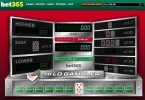
 
I think we're loosing focus here from what is really most disturbing for me as a gambler. If I see number "4" I expect to have a bigger chance of getting 5,6,7,8,9,10,11,12 than getting 3,2 or 1. Simple as that. If the game doesn't respect this most fundamental rule how can we even assume this is "fair" gambling :what: Using card symbols makes thing even worse, but the point is - when I gamble I expect results to be random not skewed and picked from a pool of options that I have not selected. Same goes for slots or any other phantasmagoric symbols that programmers might come up with.

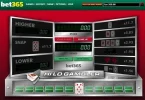
then you should be playing the physical versions with operators you can trust in countries where gaming is regulated.
 
The Reel Deal game is running from a bet365 data center using TST certified RNG.
The RNG is not the issue at all, it never has been. I was able to reverse engineer the code and would get the same results regardless of the RNG being used (I posted my code earlier in this thread). Using a TST certified RNG makes no difference whatsoever in this situation.

The games at Bet365 don't pay true odds with an RTP of 100% (like at BetFred), so there is no need to gaff the game. For example, the RTP for Red/Black from this picture is 97.5%. I don't have a screen shot for Reel Deal at Bet365, unfortunately.

Using a "TST certified RNG" was the same line that was used by Legends (I believe) on SBRForum after the BLR scandal broke. It was nonsense. They continued to use the BLR rogue software long after.

Bet_365_Hi_Lo_Gambler_02.webp

Compare Bet365's game to the 100% RTP version at BetFred that has been shown to be rogue:

Betfred_Hi_Lo_Gambler_03.webp
 
Last edited:
I've already received a report from Bet365 which will be disseminated shortly. The HiLo game is TST certified for both the .dk and .com versions. The Reel Deal game is running from a bet365 data center using TST certified RNG.

More later.

The RNG is irrelevant, you can have a coin flip game that works like this:

Generate random number between 1 and 4
If the number is 1, 2 or 3 the dealer wins
If the number is 4, the player wins

Clearly this is not a fair coin flip, but it's entirely random.
 
My understanding thus far is that it has been established that the code was altered prior to distribution, so any casinos that are supplied the game by Finsoft are likely to have an issue. So it depends on how Bet365 got their version.

According to Betfred, above, Finsoft offered them two versions, one where you could alter the payout, which is fair, and which is what Bet365 appear to have done, and another where you could alter the chance of winning, and which is what Betfred have done.

Of course the fact that Finsoft do this makes the software itself untrustworthy at any site, since we have no way of knowing if other games use cards, dice, or whatever, that are weighted.

But on the face of it Bet365 did take the non-cheating version of cheating software.
 
The RNG is not the issue at all, it never has been.

..........

Using a "TST certified RNG" was the same line that was used by Legends (I believe) on SBRForum after the BLR scandal broke. It was nonsense. They continued to use the BLR rogue software long after.

Eliot, your memory is correct.

You do not have permission to view link Log in or register now.
, one of the two casinos incriminated in that BLR Tech fiasco, states ...

"Our Casino engine is powered by certified hardware random number generators (RNGs) used by the most respected gaming operations around the world."

...
You do not have permission to view link Log in or register now.
to their RNG supplier (a company/product named Quantis RNG).

While this issue played out in the various forums, Legends management could not grasp (refused to grasp? were incapable of grasping? decided not to grasp?) that the corruption contained within their BLR Tech casino had nothing to do with the RNG. The "rigged" aspect of the game was that at certain points during game play (those points which defined a win or a loss) the RNG was simply not being used.

My understanding is that with this problem (the Finsoft/Spielo G2 Games in question) the issue is not that the RNG is not being used, but rather how it is being used. It is game processing code, not the random numbers.

But the bottom line is the same - the corruption of the game has nothing to do with the RNG.

Chris
 
I just checked. Galewind has 2 slots which contain "card" symbols:

1.) Bowl-a-Palooza slot. There are a total of 12 stop symbols in the game, 4 of which are "card" symbols - "A", "K", "Q", and "J".

2.) Take It or Leave It slot. There are a total of 13 stop symbols in the game, 3 of which are "card" symbols - "A", "K" and "Q".

However, I think it would be stretching things (to the breaking point?) to say that anyone expects that there is a deck of cards running behind the game code here.

The documented requirements are trying to address the subjective determination that game play should be significantly intuitive, not confusing. However, when you have a "K" symbol right next to the symbol of a "large breasted woman" with significant decolletage, well ....

Chris
 
I just checked. Galewind has 2 slots which contain "card" symbols:

1.) Bowl-a-Palooza slot. There are a total of 12 stop symbols in the game, 4 of which are "card" symbols - "A", "K", "Q", and "J".

2.) Take It or Leave It slot. There are a total of 13 stop symbols in the game, 3 of which are "card" symbols - "A", "K" and "Q".

However, I think it would be stretching things (to the breaking point?) to say that anyone expects that there is a deck of cards running behind the game code here.

The documented requirements are trying to address the subjective determination that game play should be significantly intuitive, not confusing. However, when you have a "K" symbol right next to the symbol of a "large breasted woman" with significant decolletage, well ....

Chris

These games look like slots, and so would be expected to behave like them. Players already know that the RTP depends on more things than the paytable and the assumption that each symbol is equally likely.

Even a simple Hi/Lo game with numbers 1 to 12 would be expected to have an equal 1 in 12 chance of each number being selected. We know from primary school that the "pack" contains one of each number, so unless clearly informed otherwise, we would assume that the selection was unweighted. It is not on a pub fruit machine where such Hi/Lo gambles exist, but players expect this from the device they are playing, and it has to be clearly indicated on the machine that there is a non random selection of outcomes.

It's a problem for casinos because outside of the UK, most players expect that games, even slots, are truly random. Non UK players are never going to be convinced that this game is OK with the "right helpfile". UK players are going to feel cheated because they don't expect to find "cheating fruit machines" hiding behind what appears to be a random game online.
 
As a side note, I just want to thank everyone who has been participating in this thread. I've been either out of town (like most of last week) or too busy with a pile of other things to get 100% involved in this. So special thanks go to those who have been contributing their time and brainpower to this convoluted issue.

Anyway, here is Bet365's full response that I had mentioned earlier:

Hi Lo Gambler

- This game is TST certified for both .dk and .com versions of the bet365 operation.

- We have no issues with Hi Lo Gambler, it is performing according to expected RTP.

Reel Deal

- After 1 million game rounds it sits near 96%, which is the expected, long term RTP.

- We are NOT running the same instance as anyone else

- This game is running from a bet365 data centre and using certified RNG devices as all our other games used in bet365.

So as it was mentioned before, the main issue is not the RNG, the original game is a flawed game by design right? Therefore should not be included with the games portfolio via Finsoft or Spielo G2.
 
So as it was mentioned before, the main issue is not the RNG, the original game is a flawed game by design right? Therefore should not be included with the games portfolio via Finsoft or Spielo G2.

I'm really disappointed with that response from Bet365. The RNG is not in question, it's what the game does with the result that is generated. For example i have a RNG designed to select a number at random between 1-26. It functions perfectly, but i assign the numbers to a suit of cards as follow;

1 : A
2-4 : 2
5-7 : 3
8-10 : 4
11-13 : 5
14-16 : 6
17-18 : 7
19-20 : 8
21-22 : 9
23 : T
24 : J
25 : Q
26 : K

Now even through the RNG functions perfectly, the set up of the game uses the RNG results in such a way as to ensure 2-6 turns up 3x as often as T-A, which is a clearly misleading practice. The 'certified RNG' argument is either being used as a safety blanket because they don't actually understand the issue or an attempt to whitewash over the real problem.

Moreover, when you find a cheating game - the one that springs to mind is the SkillOnNet VP double feature - you don't just blacklist that game and assume all the others are fine, you blacklist the entire software provider. The software provider have shown themselves to be untrustworthy and testing each and every one of their games to find the games they haven't rigged would take an unfeasibly long time. I really hope Bet 365 will take another look at this issue and reconsider their stance.
 
Hi Lo Gambler

- This game is TST certified for both .dk and .com versions of the bet365 operation.

- We have no issues with Hi Lo Gambler, it is performing according to expected RTP.

Reel Deal

- After 1 million game rounds it sits near 96%, which is the expected, long term RTP.

- We are NOT running the same instance as anyone else

- This game is running from a bet365 data centre and using certified RNG devices as all our other games used in bet365.


2-to-9 pays 1.46. This bet has RTP = 97.33%
Red/Black pays 1.95. This bet has RTP = 97.50%
JQKA pays 2.93. This bet has RTP = 97.67%
JA pays 5.85. This bet has RTP = 97.50%
A pays 11.7. This bet has RTP = 97.50%

Bet365 should publish the long term and independently audited RTP for Hi-Lo gambler.

Bet_365_Hi_Lo_Gambler_02.webp
 
So as it was mentioned before, the main issue is not the RNG, the original game is a flawed game by design right? Therefore should not be included with the games portfolio via Finsoft or Spielo G2.

The game design, or concept, is standard. The issue is with the implementation.

As I understand it Finsoft take game designs, graphics, etc., from other suppliers, and re-implement them.

In this respect there are fair game designs from for instance Orbis, that Finsoft have taken, and rigged in free-play mode.

In terms of the OP's complaint, they have taken a standard, fair game concept, seen on pretty much any Games site and chosen to rig it in real money mode.

The issue is with Finsoft themselves.
 
Last edited:
As an aside here, is it just me who feels a bit put off depositing and playing when stuff like this crops up?

I've got cash in my Neteller account ready to go, family tucked up in bed, it would usually be time for another glass of wine and a bit of slotting.

Instead, I think I'll just stick a DVD on. (And get that glass of wine :D)

As has been said earlier in this thread by several folks, how can we ever know how many games out there are 'gaffed'? Because I can't believe for one second that every cheating game out there actually gets detected.

No doubt I'll be playing again soon enough, but incidents like this do give me pause for thought.
 
Why is there even a RNG discussion? That's right up there with the help file smoke screen. Why are these casinos failing to address the "online card games odds vs real life card games odds" discussion when that's really all that matters here?

Your RNG, your "fun mode" and your stated RTP are all secondary issues, the main point is we want to know if you're ok with your casino offering a game with a rigged deck of cards. That's pretty God damn simple to answer. A Yes or a No will do.
 
Gamblers are stupid, casinos and software providers thinking gamblers are stupider than stupid is insulting.

Sorry but the responses from 2 ex accredited casinos in this thread really boggles the mind. Has no one got an answer from the actual software provider be it Finsoft or Realistic Games?
 
Gamblers are stupid, casinos and software providers thinking gamblers are stupider than stupid is insulting.

Sorry but the responses from 2 ex accredited casinos in this thread really boggles the mind. Has no one got an answer from the actual software provider be it Finsoft or Realistic Games?

PT Barnum......."There is a sucker born every minute", like it or not, they prey off that principle, maybe not PT's statement but history itself, sadly for the most part we all have to take that "leap of faith" and believe we are being dealt a fair hand, some do deal fair and some dont, but how can the average layman tell?
 
Hello everyone,

I'm sorry for the delay. We have now completed our internal investigation and just as already concluded by many others - it was obvious that the game was not acting as it should have. We have reimbursed all losses on HiLo Gambler to all players since we launched the game, on all of our brands.

As I mentioned earlier we have of course removed HiLo Gambler. We have also taken the decision to remove all other games supplied by Finsoft. Those games should be removed early next week.

Rob
 
Hello everyone,

I'm sorry for the delay. We have now completed our internal investigation and just as already concluded by many others - it was obvious that the game was not acting as it should have. We have reimbursed all losses on HiLo Gambler to all players since we launched the game, on all of our brands.

As I mentioned earlier we have of course removed HiLo Gambler. We have also taken the decision to remove all other games supplied by Finsoft. Those games should be removed early next week.

Rob

Rob that's great new! Well i realise it's never great to find something like this in one of your games, but honest it can only reflect very positively on Nordic Bet when you're the ones to step forward and do the right thing. Big big thumbs up!
 
This makes really bad taste in my mouth about any online games, this game was "easy" to find by a clever player but what about slots that need few million of spins to find what the RTP really is on their slots? and worst is that some slots dont even give you the real info, like MG. and soon some player really have feeling that they have been cheated they get the tin foil hat slap..
 
This makes really bad taste in my mouth about any online games, this game was "easy" to find by a clever player but what about slots that need few million of spins to find what the RTP really is on their slots? and worst is that some slots dont even give you the real info, like MG. and soon some player really have feeling that they have been cheated they get the tin foil hat slap..

It's put me off, for sure.

I didn't deposit last night, and Friday night slotting is basically a calendar appointment for me usually.

Think I'll skip tonight as well.

Let's face it, we're all going to lose in the long run because the casinos have the house edge to start with, if they're going to cheat as well, then I'm out.
 
What the case does NOT show, nor imply, is that any other games from any other providers are cheating. Now, I'm sure that others, like yourself, that have always questioned the fairness/randomness of just about every online casino software ever invented, will use this as a springboard to wave the "It's rigged I tells ya!!" flag referencing this issue every time someone tries to explain that the games ARE fair.


Sorry for the derail, but I knew it was only a matter of time before someone put 2 and 2 together and got 69.


Sorry Chop, your wrong, this is the only correct answer, no other opinions matter.
 
Sorry Chop, your wrong, this is the only correct answer, no other opinions matter.

Well Nifty is entitled to his opinion, and we're entitled to disagree with him :)

My personal opinion is that for every cheating game that gets called out as has happened here, there must be several more that are never detected.

The game category that worries me most is slots, as slots are what I almost exclusively play online, and they are also the one category of game it's borderline impossible to ever prove cheating behaviour with.

ENTIRELY HYPOTHETICAL EXAMPLE (I am not making any accusation here, but this is the kind of thing that crosses my mind in times like this) - The Mega Jackpot at NetEnt casinos, currently bigger than it ever has been and generating a huge amount of play on the Mega Fortune slot. The more it gets played, the more profit NetEnt makes and the more profit the casinos make.

What's to say someone at NetEnt HQ doesn't just say, 'Hey guys, we're making more money than we ever have done off this slot, the jackpot is bigger than it ever has been, and the money is just rolling in. Set the Mega Jackpot to be impossible to win for the time being, and let it go when it's over twenty million euros. We'll make a barrel load of cash in the meantime, and we'll have the publicity of paying out the biggest online jackpot ever when it's won'.

Tin foil hat brigade stuff? Most likely yes, but there's no way anyone can ever know for sure.

All I can say is that for me, personally, I feel safer keeping the money in my bank account at the moment. The thing that's most disconcerting about this current Finsoft/Spielo disaster zone is the response from two accredited casinos who are both basically saying that as long as the game sticks to its expected RTP there's no problem. The fact the games are deceptive and cheating by design seems to be entirely lost on them.

That's some scary shit right there.

(Plus of course, as Eliot has identified here, what Bet365 are saying the game's RTP is over a million spins doesn't stack up with what its T-RTP actually is from the given odds in the game. Incredible.)
 
Status
Not open for further replies.

Users who are viewing this thread

Accredited Casinos

Read about our rating system and how it's done.
Back
Top