Casinos By Status
Popular Filters
By Banking Options
All Games
Popular Bonus Filters
Popular Forums
Forum User Features
Submit A Complaint (PAB)
PAB Rules and Guidelines
Browse PABs
Popular News Sections
About Us
Sometimes I feel that MG's slots are almost too close to expected RTPOr that we always seem to hit a few more paying combinations than expected!
Raising stake IS real play because that's what people do, as we've heard. If you want to do it, please do, because I certainly would if I had your program to play MG. I think it would be very interesting for you, me and everyone....We could put any doubts to bed forever..

Several years ago, there was a poster here with the nick KIMSS (I hope I recall it correctly) and he posted extensive statistical data that proved, in his opinion, that he was more likely to lose on MG slots when placing a higher bet.
IIRC, a higher bet in his case was something like 6 EUR or perhaps even more. He admitted he sunk around 500,000 (yes, half a million) USD into slots over a period of several years.
He claimed he was a computer/software expert, based in Norway, with his own company I think, so it seemed he was able to collect and process the data from slots in quite an impressive way.
But I am no expert on statistics, so I was unable to draw my own conclusion from the charts and data he posted.
Overall, he seemed really a nice and intelligent guy, struggling with a gambling habit, which he seemed to have finally gotten rid of and left this forum for good.
The only conclusion I drew from that for myself was that I am in a "safe zone" anyway because I almost never bet higher than something like 2 EUR on slots.![]()


Thats one of the aspects I'm interested in: how changing bet size affects RTP.
In my experience, a bonusround will occur 80-140 spins from the previous round. So, I did about 1.4 mio spins on Playboy, flatbetting at 0.3.
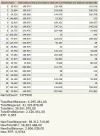
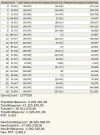
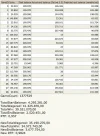
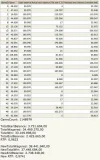
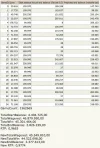
If I instead had raised my bet to 2.10 from spin 80 to spin 140 (and lowered after 140 - dont chase a bonus round!), my result would have looked like shown in the table. The last column is calculated using the exact same spin results, but with variable bets.
That sounds like a gambler's fallacy type of thinking: "If I had made that choice, I would have won" but the thing is it's very easy to say this after you already know the outcome.
That can't be right. If the bonus round has the same 1 in 150 chance of triggering on every single spin it can come on the very next spin or on the 1000th spin. Or does Playboy slot have some kind of mechanism other than scatters to trigger the bonus round?
kktmd said:In my experience, if you dont hit a bonus round within the first 200 spins, you can wait a VERY long time before you finally hit it. These cases of über-long periods of horror, add a lot to the average IMO. I suspect the Median is somewhere in the 80-140 area (but I could be wrong).

I absolutely agree![]()
Ideally, I would like to do 1 mio spins using real money, but......eeehhh.....not happening
"game doesn't have memory".....thats why I state in my profile that I think games are rigged ;-).....seriously, I've waited 2.000 spins on Hellboy...the odds of that are astronomical! I kept hitting their alternative bonusround every 80 spins - like clockwork. After a while, I started upping my bet dramatically after 70 spins, and ended up cashing 10*start balance out - but 2.000 rounds without 3 scatters??!

It's interesting that clearly changing bet ups the RTP by nearly 3% (but only in your method) and even with the amount you have spun, it is something we shouldn't expect. We know that the bonus round is responsible for a large proportion of the RTP, and if in some way your raising IS getting that bonus round closer, then that could account for it. The thing is, if 100% unmanaged random, the other play would reduce the RTP you had 'kicked' back down to nearer the 95%. It hasn't.


Hmm to confirm you should create a new 1M spins sample and see if the RTP by playing with the same strategy is still above 98% in the new data. Because now the RTP of 98% can be due to random variation (you don't hit the TRTP precisely in 1M spins, it can vary several % in either direction).
The waiting time to next free spins round should still be completely random though. If you haven't hit it in 200 spins then, because the game doesn't have memory, you are still expected to play 150 spins until you see one. It shouldn't be due any sooner even if you have already been long time without. This is balanced by the fact that sometimes you should hit them within 10 spins of each other several times in row.
The number of spins between free spins should follow a well-defined probability curve. That's why it would be interesting to get data of this to verify that it is indeed random and not controlled somehow.
Errrrmmmm hurrrummphhhh, cough *Finsoft* is a name we won't mention here, and there have been rumblings about some Playtechs in fun mode if you look around on here, but no the slots are the same. The only ones I know COULD be done this way are RTG as they can be operator set. Trust me, your fun play and real engine is the same on major reputable softwares.
Yes and no. If the game is totally random, which it is? then yes in theory. If kktmd has demonstrated an average amount of spins between each bonus round, then no, because the likelihood of NOT getting it at a certain point becomes a rarer and rarer event with each spin. I.E. over a million spins the game only fails to produce a bonus round say 3 times in any period of 1000+ spins so as your count rises the chances of hitting it increase. There is a mathematical effect (I can't remember the guy's name) that does confirm even though one event is not related to the previous in random things, balancing does occur.
Random game doesn't have memory

Dunover never understood this concept.![]()

Roulette is a poor example as it is physical wheel with no outside controlling programme/software. Unlike a slot it cannot be made to pay a TRTP.
Yes, obviously the more spins you do the more likely you are getting the feature because you simply have more shots at it. If the odds for freespins are 1 in 150, then you have 49% chance to get it by 100th spin, 73.8% by 200th spin, 86.6% by 300th spin and so on.
But on each individual spin the odds to get it should be the same. Random game doesn't have memory so now matter how many spins you have done already your odds of getting the feature soon have not increased at all. This is no different than if you see 10 Blacks having been rolled on Roulette, the odds for Red on next spin are still the same as before.
Hmm? Roulette was made to meet its TRTP (aka house edge). Both Roulette and slots are exactly the same in the sense that they will meet their expected RTP over time without the need to cheat, remember previous results or taking stakes in consideration.
What you guys are implying is that MGS slots are rigged and influenced by outside factors (such as previous results and/or stake) when you press the spin button. Sure MGS could be run by cheating crooks but I'd rather not believe that (otherwise I'd just stop playing).
So you're assuming the slots are totally unfettered, and nothing exists in the algorithms to prevent a player staking $5 and getting 100x stake, raising immediately to $20 a spin and hitting 1000x stake, then raising to $100 a spin and a few spins later hitting 4000x stake, staying at 100 stake and then 20 spins later getting a 2000x hit and pretty much (from a low-stakes start) busting a casino out?
Yes that is true under the assumptions of constant probability of 1/150. We can observe that empirically over a huge number of spins, but if, as was theorised the game is able to alter these probabilities periodically in controlled amounts in an oscillatory manner such that the theoretical RTP is still satisfied we cannot assume that this is the case.
This thread has quite a lot of activity and data posted and I am going to take a look tomorrow in more detail when I sober up a bit. I still cannot think of a way to statistically verify whether the probability does change - not possible anyway if it is constant. I have never attempted to contact slot manufacturers or casinos directly but I am guessing that they would be reluctant to divulge any information on the matter. I personally don't think it is the case in reality and if it were we would never learn about it from the industry as it would give credibility to the "I win a lot when I open my account but soon after the wins dry up" theorists.

I still think it is an interesting exercise though as even if it were true, provided the enhanced payout periods matched the reduced payout periods it would in no way make any difference to the games fairness which at the end of the day is the most important aspect.
dunover said:So you're assuming the slots are totally unfettered, and nothing exists in the algorithms to prevent a player staking $5 and getting 100x stake, raising immediately to $20 a spin and hitting 1000x stake, then raising to $100 a spin and a few spins later hitting 4000x stake, staying at 100 stake and then 20 spins later getting a 2000x hit and pretty much (from a low-stakes start) busting a casino out? i.e. there is not management of risk or better put the amount a player can go over the RTP line by in relation to amount gambled. I don't mean stopping a player getting 20x on his first 1 unit spin and thus having a short term spike in RTP of 2000%, but I mean that sort of result over an extended period which would involve a potentially huge hit for the casino?
When you play your $100 spin, what difference does it make for the slot if that $100 comes from previous wins or from a fresh deposit? None. You've got $100 in your account and you use it to buy a spin. The casino would rather see you play that $100 on a single spin with a 95% TRTP than to withdraw it. They don't have to "protect themselves" since they already have the odds on their side.
Yes, thanks, but I don't think 60@30p then 10@£15 will be right - simply because the 60 spins at 0.30 only add up to £18 before you hit the £15 spins. The results would be meaningless I think?
That's why I suggested a long multi-thousand run at .30 then bumping up to £15 at say 20,000 spins. This would show (any) contrast better.
Actually, they still might feel like they need to protect themselves. Even at 5% statistical disadvantage a lucky player can make a small casino bankrupt. He only needs enough variance to overcome the house edge temporarily. It's worth remembering that the combined bankroll of all players is larger than that of the casino and given that the casino also hands out bonuses which can shift the RTP in player's favour it's actually very likely that the casino has some risk-mitigation measures built in within the software to not go bankrupt due to a player's lucky streak.
I have seen a Casino Rewards rep spill out once that "we manage the outcomes to a certain degree" which looks like it is not completely random.
Sometimes it feels like that there is some sort of invisible ceiling that caps how much you can win from a single deposit. For example: if you play a game with 100% RTP (like Classic Blackjack at MG) then you should be able to turn a $100 deposit into $10000 balance on every 100th attempt. However I once tried this and despite 100 attempts I struggled to ever reach a balance higher than 10x of my deposit, which made me think that there was of hidden risk-mitigation control in place to prevent me reaching too high balance. Obviously if I deposit $10000 in one hundred $100 chunks and the software prevents me from ever reaching $10000 balance then I cannot be playing a 100% RTP game, can I?
You lost me when you started speaking large numbers. Very interesting thread. Just confirming what I already thought![]()
When meeting the RTP the slots are random, and if we look at BDBA in the million spins+ his highest win was it appears 5 gold bars/wilds on freespins, but he never hit the gems/wilds on freespins. So, the slot hit it's TRTP but in doing so never needed to produce the highest win. So, the variance can actually be slightly different on the same slot for a different block of 1 million spins.
Batch 1: 25125 (2791.67x Bet)
Batch 2: 37870 (4207.78x Bet)
Batch 3: 37810 (4201.11x Bet)
Batch 4: 37850 (4025.56x Bet)
Batch 5: 37575 (4175x Bet)
Exactly - the casino's exposure cannot be unlimited. I know they set max stakes etc. but even so imagine some lucky nutter betting £45 a spin on BDBA hitting the 5 wilds/gems in freespins? 187,500 pounds and then goes on to hit monsters on other slots? If we remember VWM hitting over 50k (AWP) he said when they came to pay they only had 27k available in Neteller so he had to be paid in 2 instalments. And this was from a bigger MG group.
This is not a foil-hat thread, and I originally actually asked 6 questions but as usual everyone seizes on the one that could prove all is not as it seems. kktmd has been a great help and once he accepts the freeplay mode is the same as paid games on MG, he can have the same confidence as us in his figures. The dirty work is already done; MG slots meet their TRTP over a surprisingly low amount of events, i.e. 1-2 million. This makes sense as IF the TRTP went true at say 10,000,000 spins then some players could experience dramatic beatings (bear in mind during the life of an account at any casino the average player would unlikely exceed a couple hundred thousand spins on any particular slot) while some could hit excessive winning streaks.
My idea was to dramatically raise stake to see if it somehow triggered any changes in the slots' behaviour. I suggested a few hundred K spins at lowest stake, then whacking it up by say 50x - kktmd did this and as we saw the RTP was over 98%, as opposed to 95-97 playing normally. Obviously the longer this goes on the RTP would no doubt settle back again or would it? The results aren't conclusive thus far as the sample is too small, but the clues are there to keep investigating the matter.
When meeting the RTP the slots are random, and if we look at BDBA in the million spins+ his highest win was it appears 5 gold bars/wilds on freespins, but he never hit the gems/wilds on freespins. So, the slot hit it's TRTP but in doing so never needed to produce the highest win. So, the variance can actually be slightly different on the same slot for a different block of 1 million spins.

Well, that's just it, we haven't confirmed much at all really thus far, except the TRTP is pretty much bang-on on MG slots with a surprisingly low number of spins. We've had people conjecturing in the past 100,million and similar. Clearly it's not the case and if it were the variance could be staggering on some games, assuming the RNG pool values are pro-rata.
We've had a few clues about changing stake significantly and it's short term effects, but we (kktmd lol...) need to check this over a far bigger sample amount of spins.
But there's allot of other interesting information on this thread. I noticed you're original post Dunover and wrote a response but before I could post my stupid Nexus10 ran out of battery 
It will even out in the long run. Unless there has been some new form of mathematics invented recently, it has to.
If the software/games are somehow influenced by suddenly increasing the bet, then there would be casinos everywhere going under because any AP worth their salt would be all over it like a cheap suit.
The problem is that either the RTP increases EVERY time you up your bet, or it NEVER does. So, it has to be mean that EVERY time you suddenly jack up your bet you will be a winner.....and we know for a fact that this is not the case.
It may be, in simple terms, that you start with $200, spin 100 times @ 0.50c, have $190 left (for instance), then jack it up to $25 a spin...and hit a 50xbet win. Well, your RTP is going to be HUGE at THAT point...if you cash out RIGHT there, you're a winner. However, what happens the times when you do NOT hit anything with the big spins? Your RTP plummets, of course. So the numbers will even out in the LONG run.
I know from experience that I LOSE far more often than WIN when I up my bet. The problem is that we only tend to remember the times we did it and "Yoohoo!!" hit a monster....we don't recall all the times we hit something nice on our normal bet and blow it all back using bigger bets.
I put it to you that IF it WAS a way to "beat" the casino, every operator would have a term stating that players cannot INCREASE their bets above a certain percentage....otherwise they would asking for it, surely?
I'm not a stats expert, but from what I read of the numbers kkmtd came up, I can't see how this phenomenon can be accurately measured using any kind of autoplay function etc. As players, we generally do not play until we hit 3xbankroll or -1/3 of bankroll and then start over etc, or increase our bet at that point until the same event occurs either way. The only way I can see the being proven via stats is actually using the REAL stats via playcheck and looking at what happens to the game/s at the point where the bet is raised...and this is going to be VERY difficult and time consuming for anyone. I just don't see how you can some up with accurate numbers based on computer simulations of what is a totally unpredicatable human behaviour. IMO, it is not the same as running 1.4 million spins @.30c...this IS an accurate measure.
If the experiment were run so that the bet was raised exactly every 100 spins (for e.g) and ran for another 100 spins at the higher bet, and was rinsed and repeated tens and thousands of times over, then I think we would find that the number for each bet size would be very similar in terms of RTP. I just don't see raising the bet at random intervals AFTER the data has been gathered using min bet really telling us anything at all....like the example I have earlier where you could have an amazing RTP if you got lucky and hit a reasonable win as soon as you raise the bet, but most times you will end up with an awful one.
Well I've confused myself now...but at least I know what I mean
I mean, a group of us could commit to trying this out (in fun mode even), and record what happens each time we raise the bet on a slot i.e. win/loss, and effect on current RTP. If anyone could be bothered of course lol.
In any event, it is a good discussion, and I am ignoring the tinfoil hat parts, as they are fairly mild compared to most I've heard, and at least those casting the theories are actually willing to look at real stats and data.

No, it would still make a huge difference to game fairness if the RTP was kept constant in some controlled, non-random fashion. This is because the software would control how much you can win and your wins would be spaced too far from each other to lower the probability that you are ever able to get ahead, so it would make hell of a lot of difference to the player, and it would not be a fair game at all.
There are games that are openly like that and they are called fruit-machines or AWPs. However those games clearly state how they operate. The player has the right to know whether he is playing a genuine random game or an AWP.
The only way I can see the being proven via stats is actually using the REAL stats via playcheck and looking at what happens to the game/s at the point where the bet is raised...and this is going to be VERY difficult and time consuming for anyone. I just don't see how you can some up with accurate numbers based on computer simulations of what is a totally unpredicatable human behaviour. IMO, it is not the same as running 1.4 million spins @.30c...this IS an accurate measure.
...ehhh....I'm not sure I understand? Just to clarify: the 1.5 mio spins I logged was real spins, done using MG's servers (but done using Free Play Mode - not Real Money Mode). Do you think Free Play Mode is different from Real Play Mode?
I do not quite agree here. I am not saying that the amounts you can win changes, just the probability could move in such a way that in a "dry" mode the low payout reel combos have higher than usual probability of coming in and vice versa. Over a long enough number of spins, provided that the probabilities spend equal times in "dry" and "generous" modes the TRTP would remain unchanged.
This would in no way impact the fairness - in fact you could view it as an enhanced method of gameplay (in my opinion) that could mean that when you are in a good streak it really is happy days time. Also, the probabilities would still be low, for the big payouts, just tweaked a little bit. I suppose what I am saying is something like a law of conservation of probability but taken over a large number of spins over which the probabilities do vary.
I am not saying that I think this IS the case at all, and I have no evidence to suggest otherwise - just a theory. It just seems possible that this could be implemented in such a way that the games are still completely fair and with the same TRTP.

I will definitely take a look at your report into the real money stuff though along with all the other good info that this thread has generated.
Nope, we fully understand what you have just imparted. The best point there is you observing the fact that few players would hammer away at a slot at the same stake for million+ spins. I suppose it's not reflective of real-life playing, but as you say the end result is the same - TRTP being met. It's what happens in between that interests us, and it costs us nothing to satisfy our curiousity as to what if anything can be positively observed. In fact when the data is in and analysed it could be a reference for any real foilers that appear on the forum in future - send 'em here and by the time they've read the first 2 pages they'll be so baffled and lost they'll give up...![]()
We are lead to believe that slots work simply by drawing random positions on the reel strips to stop at. I have seen the exact slot design blueprints from one casino software and their slots have been implemented exactly like that. Remember also that gaming license regulations require each outcome to be independent from previous outcomes, something which would not hold in your example.
Yeah please do, but only after your hangover goes away, it may be too heavy stuff to read in hangover. I am interested to hear if you have any ideas on how to test the randomness.
Ah I was unaware of both of these aspects. From everything here I have managed to read so far on the forum I was lead to believe that the established best guess on the software operation was not to do with reel positions at all but via a pure RNG that decides the WIN amount then the slot front end just selects which reel symbols to display that agrees with the designated win amount.
As for the gaming licence issue of outcome independence then that really does put the nail in the coffin on the theory of non-constant probabilities.
Ah I was unaware of both of these aspects. From everything here I have managed to read so far on the forum I was lead to believe that the established best guess on the software operation was not to do with reel positions at all but via a pure RNG that decides the WIN amount then the slot front end just selects which reel symbols to display that agrees with the designated win amount.
As for the gaming licence issue of outcome independence then that really does put the nail in the coffin on the theory of non-constant probabilities.
Just read your report. To be honest that is precisely how I would go about testing fairness of the slots. Stratify the price ranges into a workable yet diverse enough amount and do a Pearson chi-square test on observed to expected values.
I assume that the reason that the expected loss curve on your plots is non-linear is simply due to the players variation in staking pattern?
Also, how did you arrive at your expected values? Did you use empirical probabilities from free play spins or did you base it on uniform probability distribution applied to a known reel symbol layout?
It is a pretty conclusive proof that the slots are fair. That would be a really good article to educate conspiracy theorists.
Yes, the player varied his bets from $0.09 per spin to $18 per spin so he is betting big where the expected loss curve drops steeper and vice versa. The expected loss curve is simply plotted in Excel as: (100% - 95.46%)*Total_wagered, in other words I keep track of player's cumulative total wagered and multiply this by the house edge of the game (4.54%) to get his expected loss at any point.
I have programmed an off-line simulator for several Microgaming slots based on their known reel layouts and paytables. With this simulator I can generate millions of spins and estimate the probabilities for each payout. So the results I get from my simulator are the ones you would get from a fair and random slot.
If you want to have a look how the simulator works I uploaded a small demo version to:
You do not have permission to view link Log in or register now.
Just download the Zip-file, extract it, browse to either slot's folder and launch 'play.bat' either by double-clicking in Windows explorer or from Command prompt. The simulator is made with Java so you will need Java 7 runtime installed to run the simulator. You can get the latest Java runtime from here:You do not have permission to view link Log in or register now.
In the demo you get to play text version of the slot. Each character represents a slot symbol which are declared in the attached .jpg file.
Well, my analysis of this player's data over 200,000 spins established that MG slots A) meet their theoretical RTP B) deal out payouts that are completely in line with the payout distribution you would get from completely random reels. However there are still a couple of things:
- In the bankroll graph the player ended up suspiciously close to expected return, as if the software forced him there.
- The chi-square test for comparing payout distributions gave a value of 0.999.. which to me seems almost too good match. So yes, you will get payouts that are completely in line with expectations but it seems that they are almost too close to expectations.
Therefore I am not entirely convinced of MG game fairness yet and I feel like measuring the distances between high payouts that we discussed yesterday, might be a good idea.