It will even out in the long run. Unless there has been some new form of mathematics invented recently, it has to.
If the software/games are somehow influenced by suddenly increasing the bet, then there would be casinos everywhere going under because any AP worth their salt would be all over it like a cheap suit.
The problem is that either the RTP increases EVERY time you up your bet, or it NEVER does. So, it has to be mean that EVERY time you suddenly jack up your bet you will be a winner.....and we know for a fact that this is not the case.
It may be, in simple terms, that you start with $200, spin 100 times @ 0.50c, have $190 left (for instance), then jack it up to $25 a spin...and hit a 50xbet win. Well, your RTP is going to be HUGE at THAT point...if you cash out RIGHT there, you're a winner. However, what happens the times when you do NOT hit anything with the big spins? Your RTP plummets, of course. So the numbers will even out in the LONG run.
I know from experience that I LOSE far more often than WIN when I up my bet. The problem is that we only tend to remember the times we did it and "Yoohoo!!" hit a monster....we don't recall all the times we hit something nice on our normal bet and blow it all back using bigger bets.
I put it to you that IF it WAS a way to "beat" the casino, every operator would have a term stating that players cannot INCREASE their bets above a certain percentage....otherwise they would asking for it, surely?
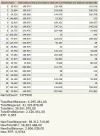
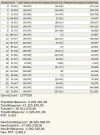
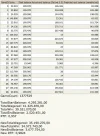
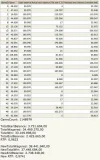
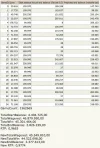
I'm not a stats expert, but from what I read of the numbers kkmtd came up, I can't see how this phenomenon can be accurately measured using any kind of autoplay function etc. As players, we generally do not play until we hit 3xbankroll or -1/3 of bankroll and then start over etc, or increase our bet at that point until the same event occurs either way. The only way I can see the being proven via stats is actually using the REAL stats via playcheck and looking at what happens to the game/s at the point where the bet is raised...and this is going to be VERY difficult and time consuming for anyone. I just don't see how you can some up with accurate numbers based on computer simulations of what is a totally unpredicatable human behaviour. IMO, it is not the same as running 1.4 million spins @.30c...this IS an accurate measure.
If the experiment were run so that the bet was raised exactly every 100 spins (for e.g) and ran for another 100 spins at the higher bet, and was rinsed and repeated tens and thousands of times over, then I think we would find that the number for each bet size would be very similar in terms of RTP. I just don't see raising the bet at random intervals AFTER the data has been gathered using min bet really telling us anything at all....like the example I have earlier where you could have an amazing RTP if you got lucky and hit a reasonable win as soon as you raise the bet, but most times you will end up with an awful one.
Well I've confused myself now...but at least I know what I mean

I mean, a group of us could commit to trying this out (in fun mode even), and record what happens each time we raise the bet on a slot i.e. win/loss, and effect on current RTP. If anyone could be bothered of course lol.
In any event, it is a good discussion, and I am ignoring the tinfoil hat parts, as they are fairly mild compared to most I've heard, and at least those casting the theories are actually willing to look at real stats and data.





 Or that we always seem to hit a few more paying combinations than expected!