


- Joined
- May 10, 2014
- Location
- UK
I'm rather pedantic when it comes to email - after a decade my email addresses became rather swamped in spam so I started to set up unique aliases for each email source (with lots of random characters and other protective measures - it's worked remarkably well over the past couple of years, three breaches were spotted long before they hit the media, the other two were never disclosed).
Yesterday, I started receiving gambling-themed spam to my Ladbrokes alias (which itself is an account I haven't used in nearly a year). I did some digging on my email server, flagged it up with their support team who sent me this rather helpful response:
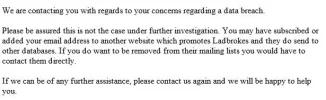
Of course, I went to the trouble of setting up these email aliases and then signed them up to a spammers mailing list...
Just a heads-up for anyone who has an account with Ladbrokes!
Yesterday, I started receiving gambling-themed spam to my Ladbrokes alias (which itself is an account I haven't used in nearly a year). I did some digging on my email server, flagged it up with their support team who sent me this rather helpful response:
Of course, I went to the trouble of setting up these email aliases and then signed them up to a spammers mailing list...
Just a heads-up for anyone who has an account with Ladbrokes!


 The randomness is to discount a dictionary attack or "common" alias (if I'd used ladbrokes@ then they could have just guessed it). I'm not for a moment assuming it'll protect me from spam, but it's to identify a potential source when such an incident occurs - as every service or opt-in gets a new and unique alias, I know exactly where it's been used. It's understandably a bit of a pain to set up, but it has been pretty reliable so far at picking up data breaches and where my email has been sold on