



- Joined
- Jan 20, 2004
- Location
- Pictland
New Casino Licensing Jurisdictions 2026: Players Beware
by Max Drayman, Casinomeister.com, 02 July 2026
The Curaçao Exodus
You may well have heard of the Anjouan licensing jurisdiction recently, but what about Mwali? Western Sahara? These are all African licensing jurisdictions that have popped into view quite recently, largely as fallout from the restructuring of casino licensing in Curacao.
To make a long story short: up until recently Curacao was the licensing jurisdiction of choice for casino operators who wanted the freedom to run their business as they pleased, for cheap, and sound somewhat respectable without really having to put in much effort. Curacao attracted 1000s of licensees over their 25 years of operation for exactly those reasons. Unfortunately the reputation of some sectors of Curaçao licensing was about as low as you could imagine it could get -- looking at you 1668/JAZ.
Starting in the early 2020s pressure from the government of the Netherlands -- Curacao is basically a Dutch Protectorate -- forced Curacao to start cleaning up the loosey-goosey mess that their licensing had become. That call for change ushered in a state-run licensing operation -- the CGA (Curaçao Gaming Authority) -- in place of the original sub-contracting Master License system. The end result was a licensing structure with tighter restrictions and higher licensing fees -- more on that below -- which, understandably, many licensees were not willing to be part of. Thus began an exodus from Curacao to the four corners of the earth in search of alternate licensing options.
The New Licensing Goldrush
So why Anjouan? Or Mwali, etc? The simple reason is much cheaper license fees. The annual licensing fee from the previous Curaçao licensing system had cost an operator about US$25,000. Under the new Curaçao licensing that has climbed to roughly US$55,000. Apparently the average license fee in Anjouan, for example, is US$9,500. Small wonder that many previous Curaçao licensees packed their bags and headed elsewhere.
Consider the benefits for a new jurisdiction like Anjouan: this is a small, over-crowded island off the East coast of Africa, a bit north of Madagascar; population just under 1M; average annual income less that US$8000. A recent count puts the number of Anjouan licensed casinos at roughly 1500, for total of about US$15M in ANNUAL licensing fees. When scaled to the local currency that works out to roughly US$100M, which is pretty good income for issuing 1500 digital licenses, maintaining a registry of licensees and throwing up a website to host it all. In theory they also offer a Complaints service to players but the reports we have to date from players who've tried this process indicates that little or nothing comes of any such complaints.
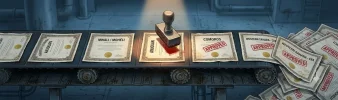
It comes as no surprise then that other "jurisdictions" have suddenly emerged to cash in on the casino licensing goldrush. Mwali -- aka Moheli, sister island to Anjouan in the Union of the Comoros -- is one of them. They, at least, offer a colourful certificate with a number of elaborate signatures and an embossed golden seal; all digital, of course.
Most recently we've seen licensees claiming a Western Sahara Gaming License. As hopeful as one can be about such things little facts like "a disputed territory under military occupation", and claims of "fast approval, low restrictions, and no minimum capital requirement" are not exactly confidence inspiring.
ABC.net.au article exposing Anjouan
In late 2025 abc.net.au -- commonly referred to as Australia's BBC -- published an article entitled:
You do not have permission to view link
Log in or register now.
, where they revealed that Comoros government officials were highly critical of the licensing powers that Anjouan has assumed for itself:"They … have in reality no physical or legal existence in the territory of the Union of the Comoros," Ait-Ahmed Djalim, a Comoros Central Bank official, said of these outfits in 2020. "They operate online via websites to scam people."
The article goes on to observe that "despite the warnings from Comoros authorities, online casinos continue to sign up", which is of course exactly what we've seen, and that continues to be the case.
The Costa Rican Pitfall
For the first 15+ years of online gambling Costa Rica was the prime offender of "do nothing" jurisdictions. In their defence though CR never claimed to be "licensing casino operations", all they were doing was issuing business licenses so the business in question could operate legally in Costa Rica. Fees and taxes were of course collected but nothing was ever promised in terms of regulating or controlling the businesses that held those licenses. And that's exactly what CR delivered: nothing.
It took the online gaming community the better part of 20 years to absorb those simple facts and let it be known that a Costa Rica "gaming license" simply didn't exist and that casinos holding the CR business license were free to do as they pleased. In practice that meant that players could expect no protection, no formal complaints process, zero enforcement of Responsible Gaming practice and effectively no control of casino theft and fraud.
Today's new crop of "licensing jurisdictions" very much appear to be doing a "rinse and repeat" of the Costa Rica model. They've upped their game a bit in terms of offering a website and a casino registry but all of the critical elements of a legitimate and robust licensing jurisdiction are still missing. To date none of the new license offerings has shown any signs of policing or regulating their licensees.
From the point of view of someone who has worked in the player complaints area for almost 20 years I would have to say that licenses like those discussed above exist for one reason and one reason alone: to appear legitimate to the uninitiated while offering little more than a facade of respectability. The level of player protection offered by these cheapo licenses is typically nil; the player is entirely dependent on the casino operator's good will. To protect yourself you must DO YOUR RESEARCH!
Attachments
Last edited by a moderator: