
shadownefrik
Registered
- Joined
- Aug 14, 2026
- Location
- Russia
The money from streamer Gellemar (his Telegram channel: topbetBO) stays with Dragon—which means we should ask Dragon himself. Who's to blame, the fake NetEnt or the casino itself, is their business. Dragon is shown on the screen. It's Dragon who pays—or, rather, doesn't pay.
Evidence #1. A homemade version instead of NetEnt.
The video comparison is simply astounding: Dragon's "Dead or Alive 3: Wanted" and the original are completely different games. The grid is different, the symbols are different, there's no free spins buy panel, and the bonus symbols on the screen don't award free spins at all—"it's a screen where there are simply no free spins." The bonus from a real provider is the core mechanic; it can't "simply not work." Only a fake one can.
Обработка видео
Hint #2. RTP from under the reels
Their own data:
Bet total: 3,369,709
Win total: 3,017,174
RTP: 89.5%
Number of bets: 18,914 spins
The official RTP of DoA3 is 96.03%; even the cut-down versions allowed by NetEnt are 94.02% and 92.08%. 89.5% is below any acceptable threshold. After 19,000 spins, the variance is no longer hidden: it's not "off," it's a setting. After all, even before the scandal, reviewers were recording RTPs of 90-95% for Dragon slots directly in the catalog, although the official figures were 96% or higher.
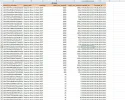
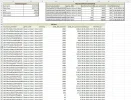
The casino writes: "This is a dump from the provider. Our dump is 100% identical." And they themselves don't realize they've approved a fake: the provider's export and the casino's export can't match column names, all round_ids, and timestamps for each spin. They match 100%, meaning both files were created in the same Excel file by the same person. If the "justification" is already a lie, then none of their symbols can be trusted.
Evidence #4. Jack Hammer 4, which doesn't exist. In the broadcast, Gellemar played Jack Hammer 4 at this casino. It's not in the "statistics" they sent. The statistics were "collected" over two weeks—and they still forgot to include the slot they played on camera. This is how dare a company talk about "provider exports."
Hint #5: The Max X odds table is a ceiling built into the script.
Let's look at their own "max" win table:
Maximum win over 18,914 spins in Dead or Alive 3 is x263. For comparison, this is a high-volatility slot with a maximum win. We win 66,666x, where 19,000 spins means dozens of bonuses. In the video with the original slot, one bonus with a $3 bet pays $1,947—x649. That is, the real slot, with just one bonus, exceeds Dragon's "maximum" of 19,000 spins. This isn't variance; it's a limitation built into the code.
The "winning" spin frequency in their statistics is 5363 / 18914 = 28.4%, while the official win frequency is 22.99%. This is a classic case of counterfeiting: small wins are distributed more frequently than in the original (to keep the player playing and hoping), but the big wins never happen. Their own table is a ready-made expert opinion against them.
Evidence #6. Refusal instead of commitment.
Gellemar asked for the bare minimum: remove NetEnt from the left and recalculate the winnings based on the RTP—not even cancel the game, although that would have been fairer. The answer was a rude, half-mocking refusal. Providing spins from the provider, which the casino is obligated to provide upon request, also constitutes a refusal. When a company has nothing, it starts behaving rudely. This is also a diagnosis.
The full formula: phony visualization + 90% RTP over a huge distance + x263 ceiling + identical "different" downloads + lost Jack Hammer 4 + provider refusal to provide rounds. There are simply no more direct and compelling arguments in this industry. Anyone who defends Dragon Mania after this either can't count or can only talk.
History: This isn't the first time.
$102,000 taken hostage. Deposit: $92,000 in USDT; withdrawal attempt resulted in account blocking and freezing with a fictitious "x3 multiplier"; the money was returned 12 days later, and only after a media scandal with demands for a public apology.
Payout of "loss": 7,550 rubles (≈ $85). A player withdraws 11 transactions of 8,000 rubles each—ten are processed, one is "lost"; customer support responds a couple of times a day with the same questions.
Unresolved complaints: 17,000 rubles (≈ $190) confiscated, 5,500 rubles (≈ $60) blocked, 2,185 rubles (≈ $25) "blocked without reason."
Complaints about unfair play. Players lose 50,000–70,000 rubles (≈ $550–$800), slot machines "don't credit winnings," and customer support ignores them.
Investigations. Unlicensed operation, "gray schemes," signs of a Ponzi scheme, covering up traces.
Evidence #1. A homemade version instead of NetEnt.
The video comparison is simply astounding: Dragon's "Dead or Alive 3: Wanted" and the original are completely different games. The grid is different, the symbols are different, there's no free spins buy panel, and the bonus symbols on the screen don't award free spins at all—"it's a screen where there are simply no free spins." The bonus from a real provider is the core mechanic; it can't "simply not work." Only a fake one can.
Обработка видео
Hint #2. RTP from under the reels
Their own data:
Bet total: 3,369,709
Win total: 3,017,174
RTP: 89.5%
Number of bets: 18,914 spins
The official RTP of DoA3 is 96.03%; even the cut-down versions allowed by NetEnt are 94.02% and 92.08%. 89.5% is below any acceptable threshold. After 19,000 spins, the variance is no longer hidden: it's not "off," it's a setting. After all, even before the scandal, reviewers were recording RTPs of 90-95% for Dragon slots directly in the catalog, although the official figures were 96% or higher.
The casino writes: "This is a dump from the provider. Our dump is 100% identical." And they themselves don't realize they've approved a fake: the provider's export and the casino's export can't match column names, all round_ids, and timestamps for each spin. They match 100%, meaning both files were created in the same Excel file by the same person. If the "justification" is already a lie, then none of their symbols can be trusted.
Evidence #4. Jack Hammer 4, which doesn't exist. In the broadcast, Gellemar played Jack Hammer 4 at this casino. It's not in the "statistics" they sent. The statistics were "collected" over two weeks—and they still forgot to include the slot they played on camera. This is how dare a company talk about "provider exports."
Hint #5: The Max X odds table is a ceiling built into the script.
Let's look at their own "max" win table:
Maximum win over 18,914 spins in Dead or Alive 3 is x263. For comparison, this is a high-volatility slot with a maximum win. We win 66,666x, where 19,000 spins means dozens of bonuses. In the video with the original slot, one bonus with a $3 bet pays $1,947—x649. That is, the real slot, with just one bonus, exceeds Dragon's "maximum" of 19,000 spins. This isn't variance; it's a limitation built into the code.
The "winning" spin frequency in their statistics is 5363 / 18914 = 28.4%, while the official win frequency is 22.99%. This is a classic case of counterfeiting: small wins are distributed more frequently than in the original (to keep the player playing and hoping), but the big wins never happen. Their own table is a ready-made expert opinion against them.
Evidence #6. Refusal instead of commitment.
Gellemar asked for the bare minimum: remove NetEnt from the left and recalculate the winnings based on the RTP—not even cancel the game, although that would have been fairer. The answer was a rude, half-mocking refusal. Providing spins from the provider, which the casino is obligated to provide upon request, also constitutes a refusal. When a company has nothing, it starts behaving rudely. This is also a diagnosis.
The full formula: phony visualization + 90% RTP over a huge distance + x263 ceiling + identical "different" downloads + lost Jack Hammer 4 + provider refusal to provide rounds. There are simply no more direct and compelling arguments in this industry. Anyone who defends Dragon Mania after this either can't count or can only talk.
History: This isn't the first time.
$102,000 taken hostage. Deposit: $92,000 in USDT; withdrawal attempt resulted in account blocking and freezing with a fictitious "x3 multiplier"; the money was returned 12 days later, and only after a media scandal with demands for a public apology.
Payout of "loss": 7,550 rubles (≈ $85). A player withdraws 11 transactions of 8,000 rubles each—ten are processed, one is "lost"; customer support responds a couple of times a day with the same questions.
Unresolved complaints: 17,000 rubles (≈ $190) confiscated, 5,500 rubles (≈ $60) blocked, 2,185 rubles (≈ $25) "blocked without reason."
Complaints about unfair play. Players lose 50,000–70,000 rubles (≈ $550–$800), slot machines "don't credit winnings," and customer support ignores them.
Investigations. Unlicensed operation, "gray schemes," signs of a Ponzi scheme, covering up traces.