- Joined
- Mar 10, 2005
- Location
- Pennsylvania
One game that a strategy works, is blackjack. At least in BJ it's still random, but of course you're not going to double down on a hard 20 and give your money away. 

Casinos By Status
Popular Filters
By Banking Options
All Games
Popular Bonus Filters
Popular Forums
Forum User Features
Submit A Complaint (PAB)
PAB Rules and Guidelines
Browse PABs
Popular News Sections
About Us

One game that a strategy works, is blackjack. At least in BJ it's still random, but of course you're not going to double down on a hard 20 and give your money away.
Please provide me with confirmed information that any online casino Black-Jack game or any other card game (video poker etc.) is running from a 52 card deck random draw platform and not running off an RTP platform. Direct me to where I could read this as being fact. Also, somebody said so isn't good enough.
Thank you...
Based on five card draw poker and a 52 card deck, ....
... The game is played using two regular 52 card decks.
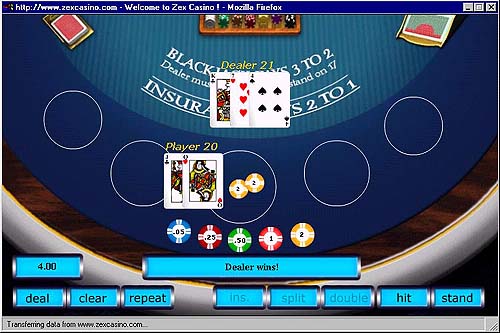
Like for example, the casino that's on the rogue list for having cheating software?
You know, the one where the dealer hit a hard 17 to make 21 against a player's 20?
Sad thing is, they could have gotten away with it if their programmers had half a brain.
Las Vegas for fact runs video poker games from random card draw.
Atlantic City for fact runs video poker games from RTP draw.
So now I ask you -
Please provide us with confirmed facts: Which system are online casinos running their video poker games from for fact??
As I said before, provide us with facts to the opposite.

Of course this is all just my opinion and observation based on 7 years of almost daily play

.....Do the video poker and BJ games being offered online run off a true random card draw program, or an RTP program which would then classify theses games nothing more then another slot machine?
I play or wager a certain way and the casino adjusts to it.
....It is painfully obvious that whenever you make larger bets, the software goes into another mode....perhaps taking out x number of face cards. I have brought this up before....and usually get met with the response that, "well, you only have a small sample....you need to play tens of thousands of hands to have something to base this on etc etc etc" Well, I am not going to test out a software placing $50-$100 bets to see if its fair or not. I am not an idiot. I am sure software developers know this, and therefore only put this 'gaff' in when your bet reaches $xx ....so it will not be as obvious.
I mean,how many small samples do you need to gather before you can finally say, yeah something isn't right here????.....

So true!
You are not only playing against the cards, but against the AI.
As the casino adjusts to my style, I have tried to counter by readjusting my playing style. Its like you are playing cat and mouse with the software, not blackjack....
I am about ready to give up online gambling myself, but like 4OAK, I want the satisfaction of knowing what it REALLY is that I have been up against.
Not cherry picking results here....last session at CW. Why cant I ever WIN with decent size wagers??


........4. Keep a count of the blackjacks dealt to you and the dealer. You can often tell what way the trend will go by keeping track of who is getting the most blackjacks, oh and the dealer can get 3-4 blackjacks almost back to back on a regular basis but you are lucky to get 2 in a row a session.......
7. And you know what? If the blackjack is rigged how about the roulette,craps,sicbo,baccarat,red dog,ect....? Are they all magically fair versions of their B&M counterparts and blackjack is the only one set to the RTP, don't kid yourselves they are all set to an RTP every game is the same thing as a slot machine, it baffles me why the casinos are so keen on this "bonus" restrictions on the table games because they are no different then slot machines...IMO the "bonus" restrictions are only there to provide the illusion that the games actually resemble the real thing...they DON'T
.....Im glad someone else sees what I see with Rival blackjack. It is outright theft.....With Rival you can be sure that:
-You will lose about 2 out of every 3 hands you double....
Having started playing online blackjack about 18 months ago (200000+ hands, 70% MGS, 20% RTG, 10% Playtech), I'm now seriously considering quitting because I'm absolutely convinced, that it is not a 100% random draw game. Until around November 2009 I was quite convinced, that MGS is more or less random draw, while I suspected RTG from the beginning of being RTP draw (my Playtech sample is too small to justify). But from November 2009 till February 2010 successively all MGS casinos I played showed more and more RTP draw behaviour, so I don't think that today exists any more a random draw online blackjack game......
My assumption is, that all of these games have a "random draw" mode and a "RTP mode" and that in earlier versions games changed between these modes according to a fixed pattern, probably hardcoded or through a parameter set by the software provider. Todays versions obviously have an adaptive way to change between these modes, depending on the players betting strategy and probably also on external settings defined by the casino or the software provider.
So, as a player, you can see quite long phases of perfect random blackjack, but then... all of a sudden it switches to RTP mode and you don't think anymore that this game has to do anything with blackjack.....
......I totally agree with the many posters here who simply want the casinos to make a clear statement on this: Why can't they simply state whether its random draw, RTP draw or some mixture of both? This would immediately end this kind of discussions...
.....If the RTP’s have been lowered I want to know up front what they are so I could make an educated decision. Don’t try and tell me I had over 2 years of consistent bad session after bad session with the amounts I willingly burned, or haven’t experienced enough hands to know better. Save that shit for someone else....
.......I never once spoke on any forum about the actual amount of money I ever won and or lost. Any numbers I spoke on forums were always inflated for the sake of privacy. I’ve learned throughout my life to never gloat about my fortunate circumstances since personal experiences have proven only to draw envious foes waiting and hoping for the opportunity to kick you if you fall.
.....I pulled the plug till convincing evidence can be proven otherwise. I’m already stepping up my visits to land casinos, and after getting off my fat ass I’m realizing even more all the other gratuities that enhance pissing your money away gambling which are all missing from online......Oh yea, when it comes to cashing out at land casinos the whole process to actually having cash in hand is about 5 minutes.
I totally agree with the many posters here who simply want the casinos to make a clear statement on this: Why can't they simply state whether its random draw, RTP draw or some mixture of both? This would immediately end this kind of discussions...

when I gained the ability to predict the next card out of the deck with surprising accuracy...
Is it 'rigged'? I dunno. After a million hands the numbers may all be as they should be. But, in my experience, online BJ just plays weird. It doesn't 'feel right' if anyone knows what I mean. It's just not like playing with real cards. So I can't stand to play it either. I know... nothing scientific or math based in those opinions.
I agree with those whole page.
No data, but years of playing BJ at casinos, you can predict when the dealer will pull a 6 when he is showing a 15 to beat your 20.
Rival is the worst of them all, I only had to play at one rival casino to conclude that, and never went back.
I've only been around here for a little over a year. From all the posts I ever read from Casino Reps, are usually related to bonuses and justifying their related rogue issues, discussions on the basic mathematics of games, correcting or justifying assorted rogue tactics like T&C's, explaining the excuses for delayed payments, thanking the occasional satisfied poster for the free spam, promoting promotions, explaining away bad luck sessions, and the like.
Yet, when it comes to asking any question even the most basic like this thread is seeking about Random or RTP draw, which by the way should be information every player should openly have access to before risking a single penny, so at least they could apply the right strategy to minimize their already preset long term guaranteed loses; you can't get a single post.
Many of them have read this thread and remain in hiding. Instead they rely on waiting for the gun-ho posters and protectors to discredit our assumptions, and charge our findings with conspiracy theory's.
We're not asking questions here about how much money their making or any personal inner operations. These are need to know basic ground rules that should be easily obtainable from any casino offering a fair game. Land or Online...
Without wanting to willingly offer this information, they are actually denying fair play and this should at least leave the educated gambler being able to make an educated assumption.
EDIT: 4oak, if you want Bryan to try and get you an answer to your question, you're probably going to have to send him a PM and either ask him directly to speak with the software providers, or ask him to scan this thread. He doesn't read all the threads on the forum, and if he thinks it's just another thread with cries of "rigged software".....chances are he may not bother with this one. Just my thoughts.
They only admitted it after many players were outraged after being able to prove that the card games and VP in fact played out as a slot machine.
I also would think that anyone that considered this thread to be based on cries of rigged software could only be a shill.
You are not going to get much discussion if you make it clear you won't believe anyone disagreeing with you?
In my opinion all card games have to use the same mechanics as a normal game with real cards would. If any casino actually used something else then they would be cheating likeYou do not have permission to view link Log in or register now.was proven to do.